

IIEA Summer Reading List 2023
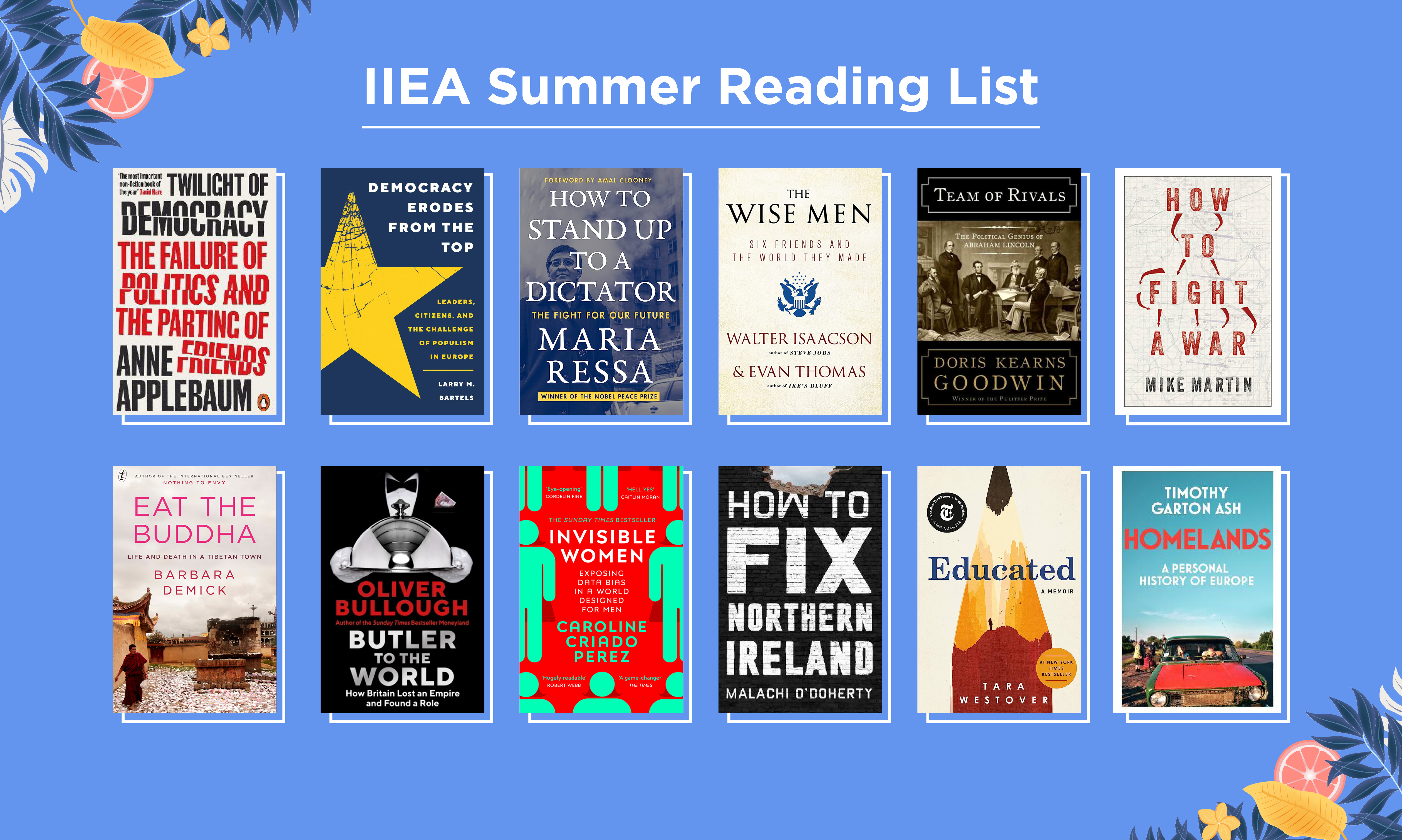
As we head into Summer 2023, the IIEA has compiled a list of suggestions for your summer reading, based on top recommendations from IIEA staff. These books cover a diverse range of countries and topics - from US history to the erosion of democracy in the Philippines, and from sectarianism in Northern Ireland to life in contemporary Tibet. Many vital and topical themes are explored across these pages – including debates about international democratic backsliding, the rise of tax havens, the power of education and gender-related data biases. If you are looking for something to read this summer, this list is a great place to start.
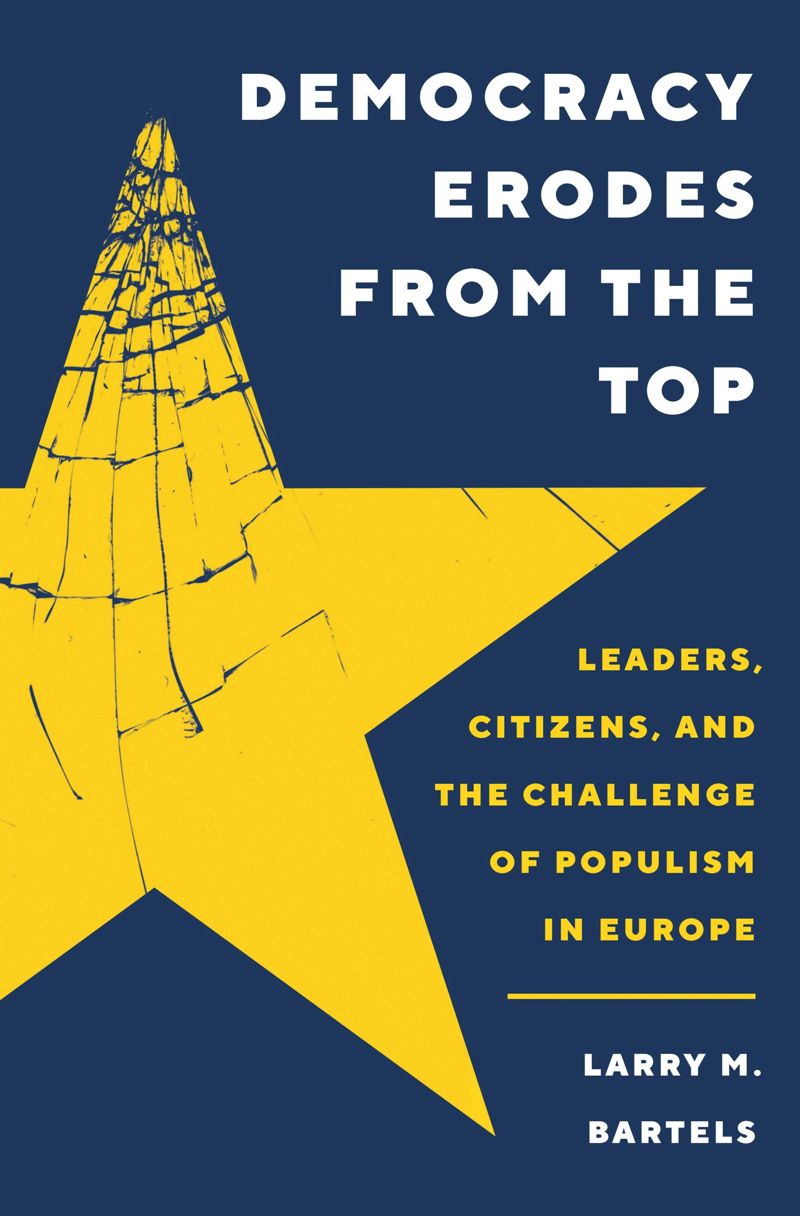
Democracy Erodes from the Top: Leaders, Citizens, and the Challenge of Populism in Europe by Larry M. Bartels, Professor of Political Science and Law at Vanderbilt University
When discussing the perceived crisis of democracy, there are often many opinions but sometimes relatively few facts. In his book Professor Larry M. Bartels refreshingly challenges some of the prevailing wisdom about the crisis of democracy drawing on empirical evidence and polling data. Professor Bartels challenges the assumption that surging support for far-right populist parties and democratic backsliding across Europe is linked to rising economic dissatisfaction, increasing opposition to immigration, deepening scepticism of European integration, and discontent with democracy. Indeed, the author contends that in recent years citizens are just as positive – or are even more positive - about the economy, democracy, immigration, and European integration than they had been previously. The book tentatively suggests alternative factors to consider when trying to explain democratic decline and serves as a valuable contribution for everyone interested in the topic.
Seamus Allen, IIEA Digital Policy Researcher
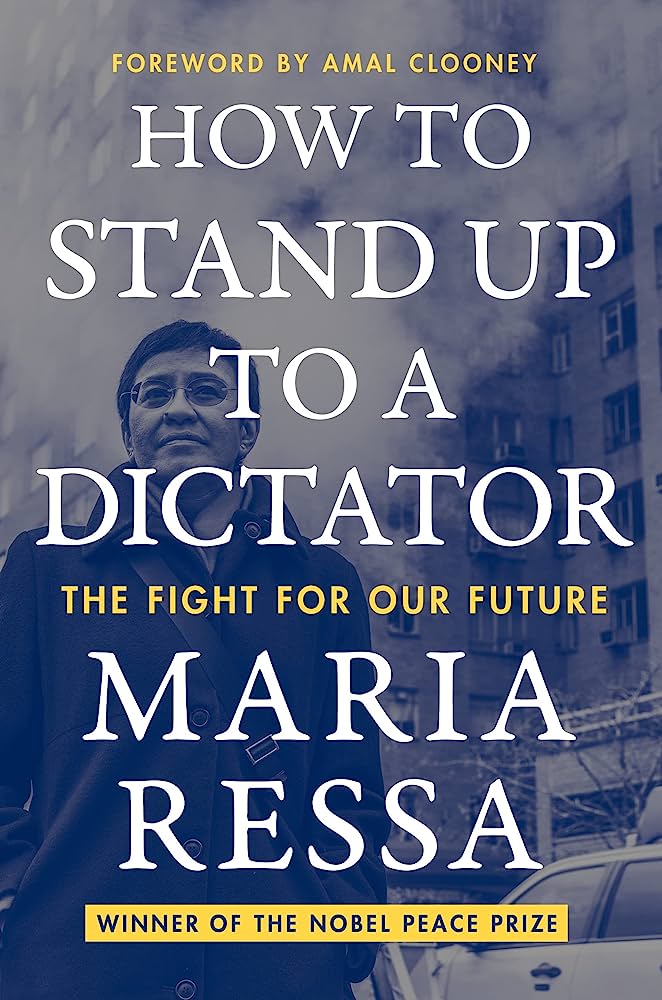
How to Stand Up to a Dictator: The Fight for our Future by Maria Ressa, Nobel Peace Prize Winner
This book charts Maria Ressa’s journalistic career and how democracy has been undermined in the Philippines while examining the relationship between digital technologies and democracy around the globe. Ressa explains how the internet became an instrument of mass manipulation in the Philippines partly due to government-backed disinformation campaigns, bots, troll factories, and algorithmic manipulation. Ressa recounts how the government of Rodrigo Duterte (2016-2022) persecuted the media through online harassment and online hate campaigns, censorship, fraudulent criminal charges and arrests - including against Ressa herself. The book movingly portrays the severe personal toll Ressa suffered for her integrity, and it demonstrates her courage and resilience as she persevered in reporting the truth. Ressa originally sees digital technologies as empowering tools that can bolster democracy; she now warns that social media may be the biggest threat to democracy around the world today, and warns of parallels between the Philippines, the US, Europe and elsewhere.
Seamus Allen, IIEA Digital Policy Researcher
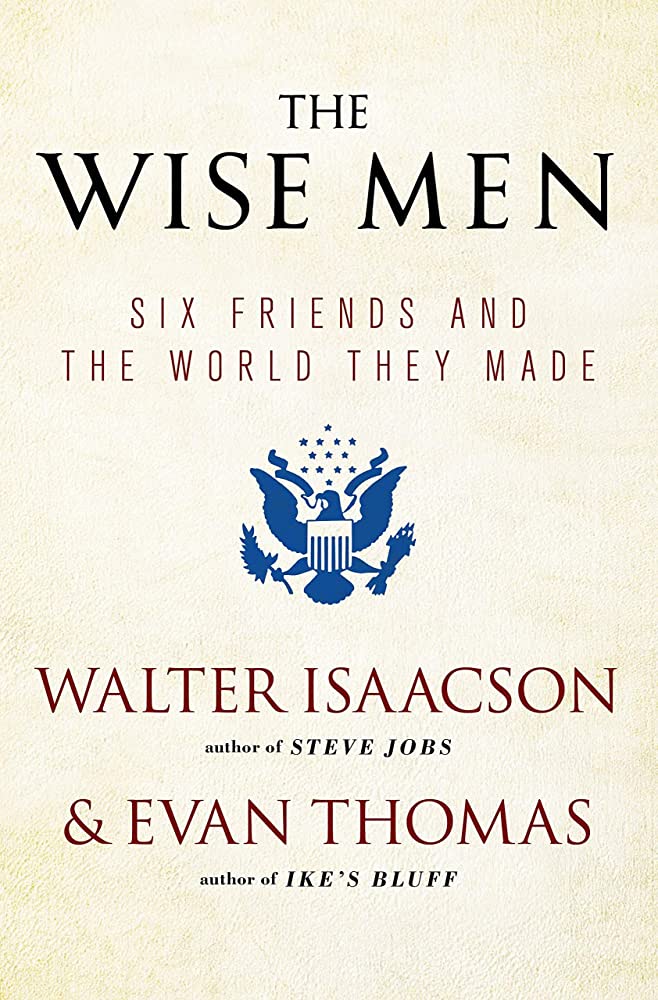
The Wise Men: Six Friends and the World They Made by Walter Isaacson and Evan Thomas
For those interested in US politics, but who want to take a break from reading about the indictment of a certain former President, The Wise Men provides a valuable insight into the mechanics of US foreign policy throughout the Cold War.
It centres on a cast of six characters who led the foreign policy ‘establishment’ during this turbulent period, including the freewheeling diplomat, Averell Harriman; the sharp-tongued Secretary of State, Dean Acheson; and the intellectual, George Kennan.
The titular ‘Wise Men’ were central in devising the Truman Doctrine and Marshall Plan, helping to fashion a new world out of the rubble of post-war Europe. They articulated the policy of containment throughout the Cold War and watched as the US became embroiled in conflict in Korea and Vietnam. At the heart of their story is America’s transformation from an isolationist to an interventionist power, and its emergence as the global hegemon it is today.
Naoise Kenny, EU Affairs and Energy Researcher
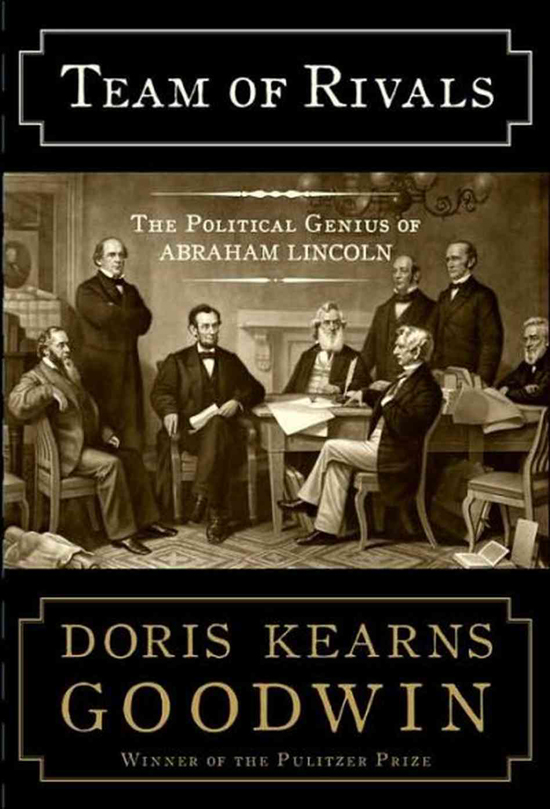
Team of Rivals: The Political Genius of Abraham Lincoln by Doris Kearns Goodwin
What makes this account of Abraham Lincoln’s life particularly fascinating is the multiple historical perspectives that are woven into the narrative. Goodwin details the life of Lincoln along with his three political rivals in the 1860 presidential election, who would later go on to serve alongside Lincoln in his cabinet: William H. Seward, Salman P. Chase, and Edward Bates. What emerges from this multiple biography is a sweeping history of the US Civil War era; one that is well contextualised for the modern reader. It is perfect for those readers looking for an engrossing but lengthy read to delve into during the summer months.
Naoise Kenny, EU Affairs and Energy Researcher
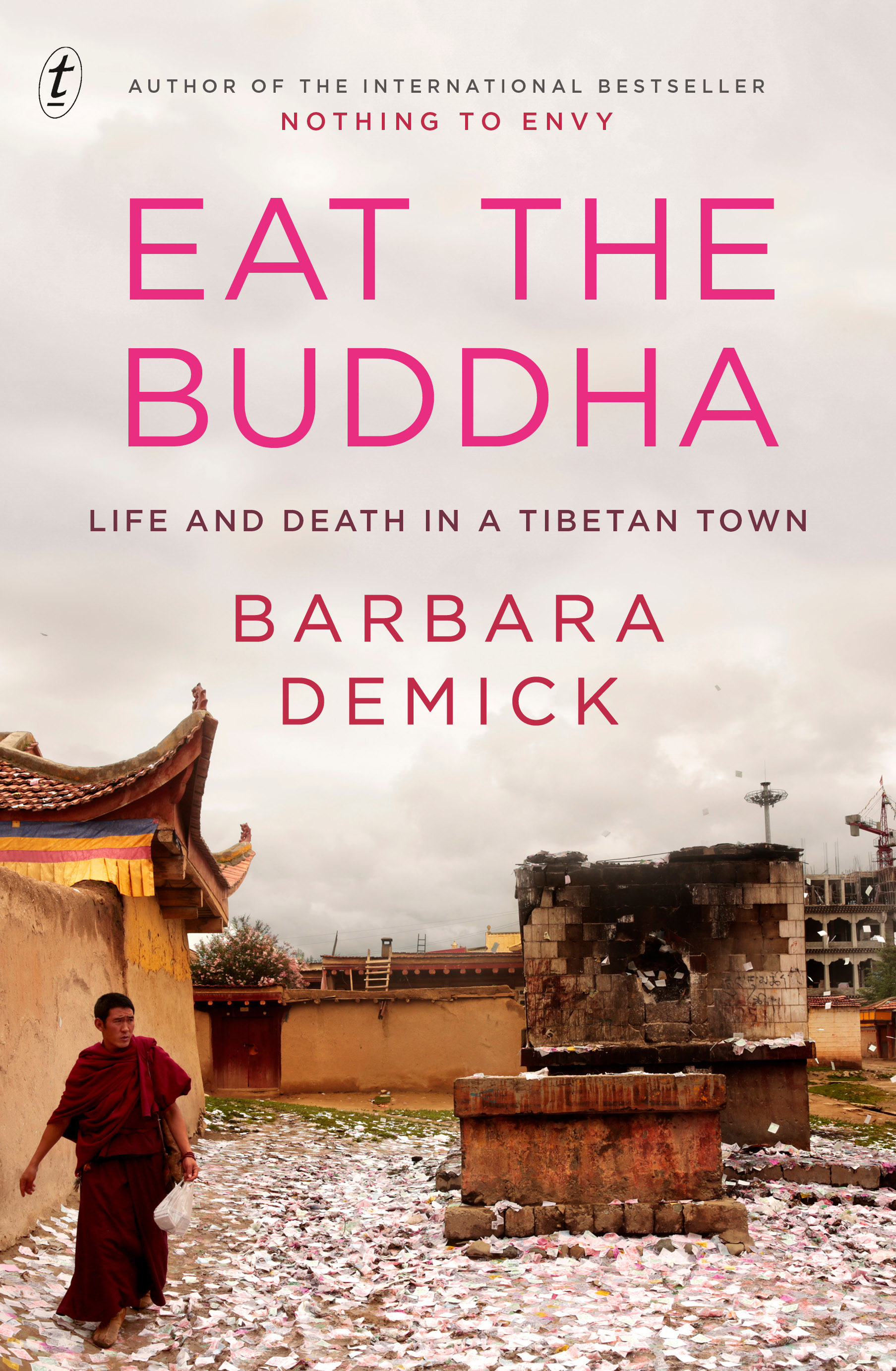
Eat the Buddha: Life and Death in a Tibetan Town by Barbara Demick
Eat the Buddha recounts the lives of the inhabitants of Ngaba – a town perched high on the Tibetan plateau, and a centre of Tibetan resistance against Chinese rule. The characters that Demick follows in this decade-spanning account include a Mei Princess, whose family was wiped out during the Cultural Revolution, a poet and intellectual who was jailed for dissidence, and a Tibetan nomad who became radicalised in the famous Kirti monastery. By weaving these stories together, Demick paints a picture of the Tibetan people’s struggle to preserve their culture and religion, in an easily accessible narrative style that makes for some interesting summer reading.
Naoise Kenny, EU Affairs and Energy Researcher
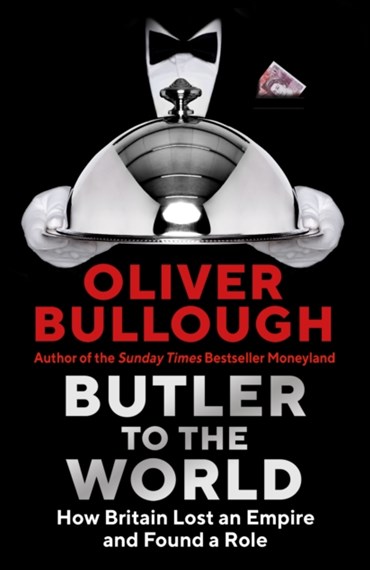
Butler to the World by Oliver Bullough
Butler to the World details how Britain came to assume its role as the centre of the offshore economy. The author dates the collapse of British imperial power to the Suez crisis in 1956 and argues that this was the moment when the UK found a new role as an agent and facilitator to the powerful and wealthy globally. Bullough illustrates how old colonialists fashioned the self-governing overseas territories, such as the British Virgin Islands, the Caymans, and Gibraltar, as tax havens by creating shell companies and financial instruments that allowed multimillionaires and global corporations to avoid paying taxes. Bullough also details how successive UK governments have been complicit in these practices.
Leanne Digney, Global Europe and Health Researcher
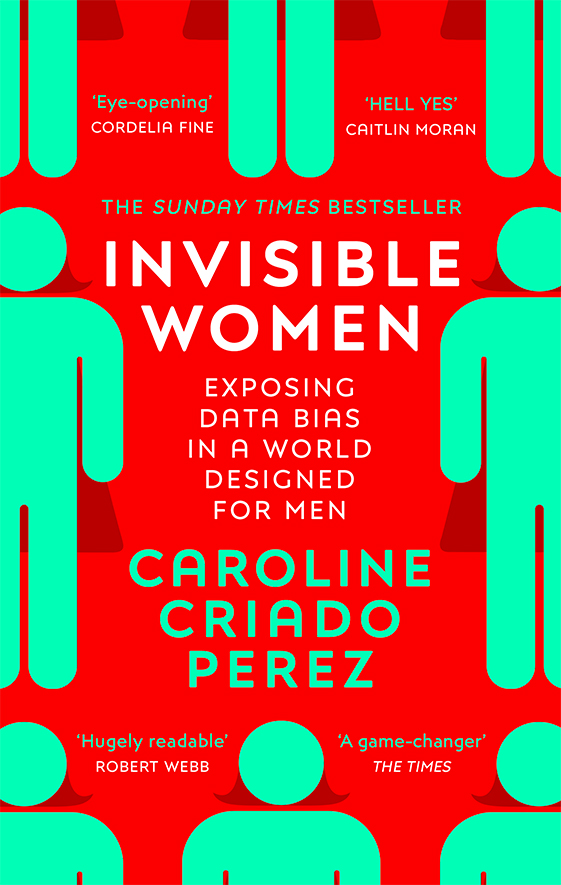
Invisible Women: Data Bias in a World Designed for Men by Caroline Criado Perez
Invisible Women shows that in a world largely built for and by men, we are systematically ignoring half the population. Criado Perez exposes the pervasive gender data gap and demonstrates how this gap is at the root of perpetual, systemic discrimination against women. From government policy and medical research, to technology, workplaces, urban planning, and the media, Criado Perez attributes gender-blindness to the resulting 'one-size-fits-men' approach.
Pointing to a range of statistics, the author shows the far-reaching implications that this has on women’s lives; women in Britain are 50% more likely to be misdiagnosed following a heart attack as heart failure trials generally use male participants. Cars are designed around the body of 'Reference Man', so although men are more likely to crash, women involved in collisions are nearly 50% more likely to be seriously hurt. This book brings to light how many seemingly innocuous issues are not seen as gender/sex related while the opposite is in fact true.
Leanne Digney, Global Europe and Health Researcher
How to Fix Northern Ireland by Malachi O'Doherty
As Malachi O'Doherty sees it, the 1998 Belfast/Good Friday Agreement was a political solution to what was seen as a political problem. However, the author argues that the issues were not so much political as religious, and the entrenched Protestant and Catholic viewpoints are no closer now than they were 25 years ago. I enjoyed how O’Doherty wove his personal stories into the social history of Northern Ireland and provided some solutions on how to heal the centuries old divisions.
Sarah Burke, Creative Director
How to Fight a War by Mike Martin
How to Fight a War provides an easy entry point into how modern wars are fought. Martin, himself a former soldier, provides a succinct overview of how force is employed by various actors to achieve political ends, and provides a breakdown of the mechanics of modern warfare. Useful for both new and more intermediate students of modern conflict, How to Fight a War provides an accessible handbook for those seeking a greater understanding of the world’s many conflicts.
Cian FitzGerald, Security and Defence Researcher
Educated by Tara Westover
In her memoir, Tara Westover offers a unique and provocative insight into Mormon fundamentalism in the US and the role and value of education in lifting people out of extremism. As the youngest of seven in a survivalist family, Westover recounts growing up in extremism, and how education changed her world view entirely, as she goes from having not stepped foot in a classroom until she was 17 years old to being awarded a PhD in intellectual history from the University Cambridge.
Keelin O’Sullivan, Development, Climate and Energy Researcher
Twilight of Democracy: The Failure of Politics and the Parting of Friends by Anne Appelbaum
This is not a new book but is one I found myself reaching for again as we look ahead to a year and more of consequential elections across Europe and North America. Anne Applebaum’s short 2020 book charts the erosion of democratic norms across Europe and North America, with a focus on the cases of Hungary, Poland, the UK, and the US. The author reflects on the role played by elites, intellectuals and ‘people in high places’ in promoting and legitimising right-wing populism and authoritarianism. For Applebaum, rather than seeking truth or promoting policies to improve the lives of the citizenry, such actors seek to defend their leaders regardless of consequences. For the author, the motivations for doing this are often rooted in ambition, revenge, and resentment, as much as in any fear of cultural or social change. Amid the rise of mis- and dis-information, this book provides an essential contribution to the urgently needed discussions around the protection of fragile democracies, and the need to arrest democratic backsliding.
Barry Colfer, Director of Research
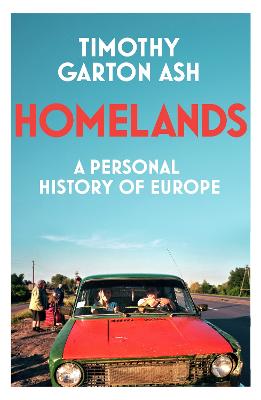
Homelands – A Personal History of Europe by Timothy Garton Ash
Written with Garton Ash’s unflinching passion and clarity, this book chronicles the author’s experiences of some of the key moments in European history, from the fall of the Berlin Wall, the democratic transition that swept Central and Eastern Europe in the 1990s, the expansion and deepening of the European project, the UK’s withdrawal from the European Union, and Putin’s war in Ukraine, to name a few.
Interspersed with these public histories, the book also introduces the reader to some of the author’s private histories, including to the living room in France where he first smelled Gauloise tabocco and watched the moon landings while on school exchange, to signing books in revolutionary Budapest in 1989, to the field where his father played cricket many decades before when the guns fell silent across Europe at the end of World War II. This book is equal parts time machine and travel guide and is strongly recommended to anyone wanting to make sense of Europe, past and present.
A recording of a presentation by Timothy Garton Ash about ‘Homelands’ at the IIEA in May 2023 is available here.