

Ireland and the UN Security Council - This Week: Week 88
Week 88, 12 – 16 September 2022
This bulletin will provide a brief analysis of last week’s meetings at the UN Security Council (UNSC), and an overview of the upcoming meetings this week.
Last week, the Security Council remained focused on Ukraine and convened three times to discuss the concerning situation there. A meeting was also held on peacekeeping reform and the Council was briefed on Somalia.
- At a meeting on Ukraine, requested by Russia, on 6 September 2022, the head of the International Atomic Energy Agency (IAEA), Rafael Mariano Grossi, called for the creation of a nuclear safety and security protection zone around the embattled Zaporzhia nuclear power plant in Ukraine, and warned the Council of a potential catastrophe should the facility sustain further physical assault amid reports of shelling. United Nations Secretary-General, António Guterres, added that all steps must be taken to avoid such a scenario. Ireland called on the Russian Federation and, indeed, all States to fully commit themselves to the seven pillars of nuclear safety and security for all nuclear facilities and materials, including in situations of armed conflict.
- On 6 September 2022, Jean-Pierre Lacroix, Under-Secretary-General for Peace Operations, briefed the Security Council in the context of its resolution 2378 (2017) on peacekeeping reform. He outlined the need to ensure personnel safety and security, and highlighted that the accountability of peacekeepers, and the full, equal and meaningful participation of women in peacekeeping remain key priorities. Ireland led on the development and adoption of Council resolution 2594 (2021), which aims to ensure that as a United Nations peace operation draws to a close, it does so in a way that supports peacebuilding objectives and ensures that gains made towards peace are not lost in transition. Ireland underlined its support for the Strategy for the Digital Transformation of United Nations Peacekeeping aimed at addressing emerging threats, such as the weaponisation of new technologies, misinformation, disinformation and hate speech. Ireland has also taken on the role of developing a series of recommendations across regional groupings in the Action for Peacekeeping (A4P) initiative for a “Women, Peace and Security Champion”.
- On 6 September 2022, a Security Council press statement was issued by France, the Council President for the month of September. The Security Council condemned the terrorist attack which took place outside the Embassy of the Russian Federation in Kabul, Afghanistan, on 5 September, which was claimed by Islamic State in Khorasan Province (ISKP), an entity affiliated with Islamic State in Iraq and the Levant (ISIL/Da’esh), and resulted in the deaths of at least six people, including two Russian Embassy employees, and injured several more.
- The Security Council was briefed, on 7 September 2022, by James Swan, Special Representative of the Secretary-General and Head of the United Nations Assistance Mission in Somalia. The Special Representative informed the Council that the political climate in Somalia is currently stable but warned of the dire drought-induced humanitarian situation and the ongoing security threats posed by al-Shabaab. He urged federal and state officials in Somalia to collaborate and use the promising political situation to address key national priorities from security to governance to the humanitarian crisis. Ireland highlighted that the number of women appointed to the new Somali Cabinet falls short of the country’s own commitments and emphasised that like all countries, Somalia needs to ensure the full, equal and meaningful participation of women throughout society. Addressing the dire humanitarian emergency unfolding across Somalia, Ireland urged the international community to do everything it can to support the Somali people
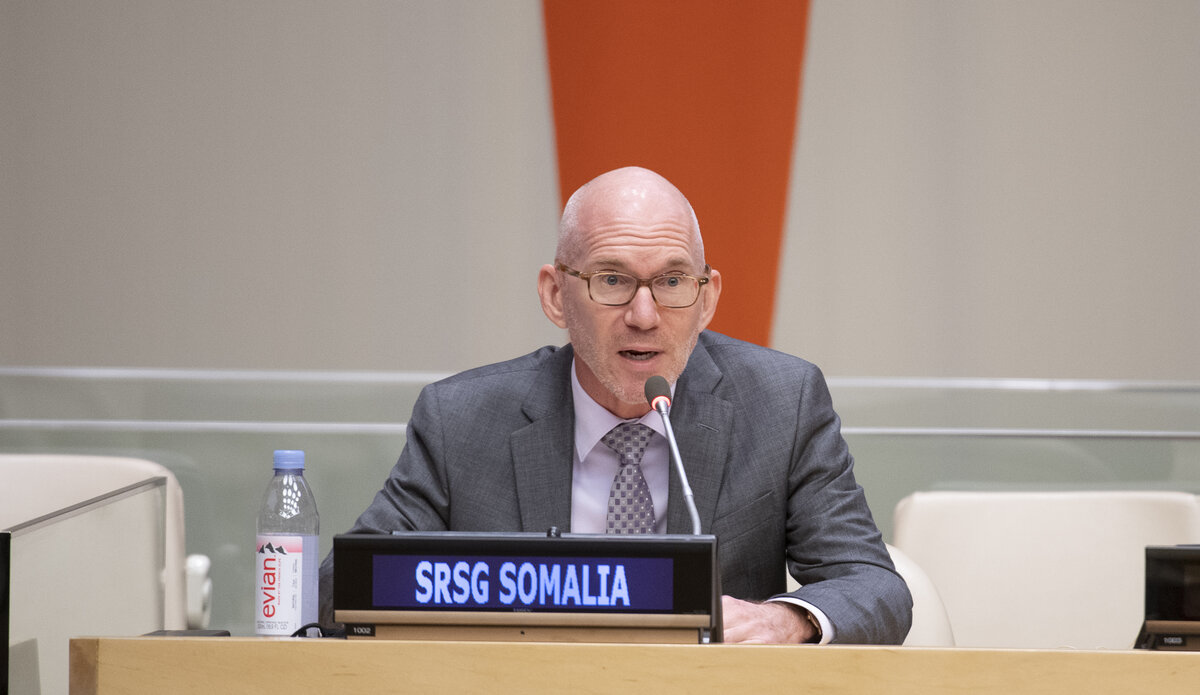
James Swan
- On 7 September 2022, Rosemary DiCarlo, Under-Secretary-General for Political and Peacebuilding Affairs, informed the Council of disturbing reports of Ukrainian civilians subjected to forced displacement, deportation and “filtration” camps run by the Russian Federation, and called for these reports to be independently investigated. Ilze Brands Kehris, Assistant Secretary-General for Human Rights and Head of the Office of the United Nations High Commissioner for Human Rights (OHCHR) in New York, reported that OHCHR has verified that Russian armed forces are subjecting civilians to so-called “filtration”, which is a system of security checks and personal data collection. During this process, persons are allegedly undergoing body searches, sometimes involving forced nudity, along with detailed interrogations about personal background, family ties, political views and allegiances, and women and girls are at risk of sexual abuse. Ireland called on the Russian Federation to comply with its international law obligations, stressing that there must be full, safe and unhindered humanitarian access to civilians, including those who choose to remain in Ukraine or who are unable to leave
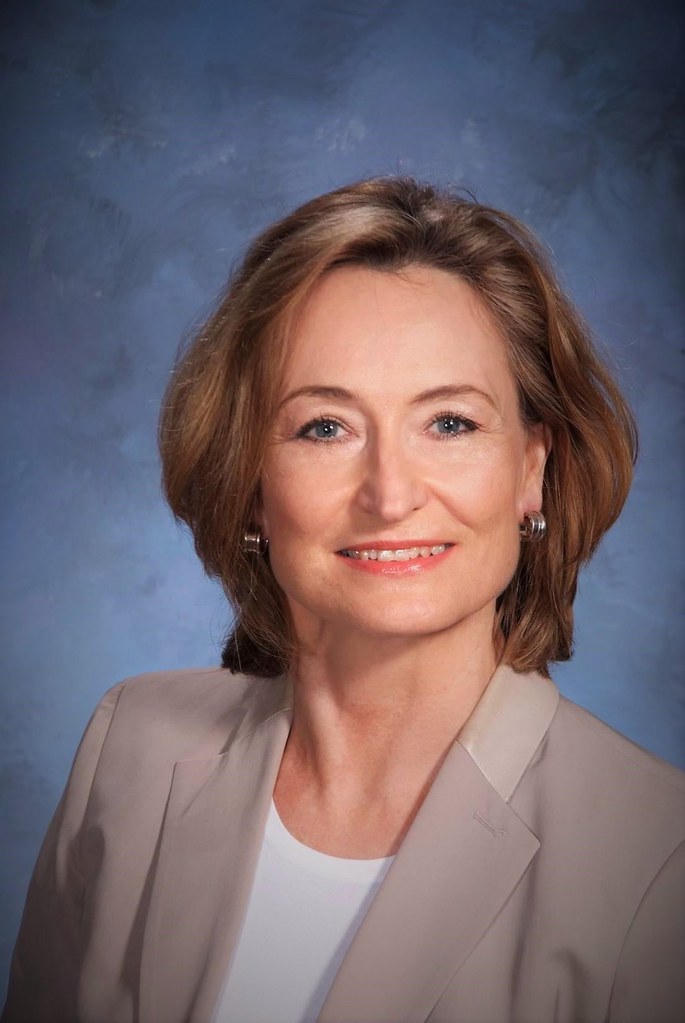
Ilze Brands Kehris
- On 8 September 2022, the Council held closed consultations on Yemen.
- In a further meeting on Ukraine on 8 September 2022, the Council was briefed by the High Representative for Disarmament Affairs, Izumi Nakamitsu, who expressed concern regarding a large-scale influx of weapons to conflict-affected zones, she outlined that there have been widespread and independently verified reports of the transfer of major conventional weapon systems to local armed groups in Ukraine. The High Representative encouraged states to make use of the United Nations Register of Conventional Arms to enhance transparency. Ireland emphasised that the decision by the Russian Federation to recognise entities the non-Government‑controlled areas of the Donetsk and Luhansk regions of Ukraine as independent has not changed those borders. Ireland further called on the Russian Federation to stop trying to use the Council as a platform for its disinformation campaign
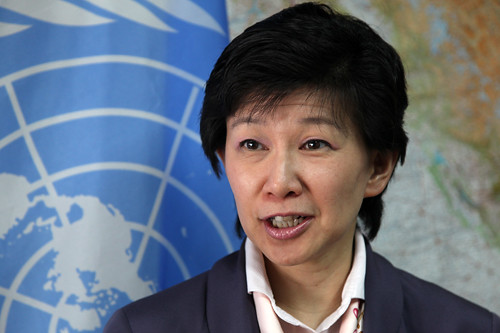
Izumi Nakamitsu
The Week Ahead (12 - 16 September 2022)
This week, the Council will hold briefings and consultations on Sudan, Syria and South Sudan. The Council is scheduled to adopt a resolution renewing the mandate of the UN Investigative Team to Promote Accountability for Crimes Committed by Da’esh/ISIL (UNITAD).
Monday – 12 September 2022
- No official meetings.
Tuesday – 13 September 2022
- The Council will hold a Briefing and Consultations on the situation in Sudan and the activities of the UN Integrated Transition Assistance Mission in Sudan (UNITAMS), with a briefing from Special Representative for Sudan and Head of the United Nations Integrated Transition Assistance Mission in Sudan, Volker Perthes. Ahead of the briefing and consultations, Ghana, as the Chair of the 1591 Sanctions Committee (Sudan), will provide a briefing on the recent work of the Committee.
Wednesday – 14 September 2022
- The Council will hold a Briefing and Consultations on Syria, covering both the political and humanitarian files. Special Envoy for Syria, Geir Pedersen, and Under-Secretary-General for Humanitarian Affairs, Martin Griffiths of the Office for the Coordination of Humanitarian Affairs, are expected to brief. Under-Secretary-General Griffiths will provide an update on progress under resolution 2642. Norway, as co-penholder with Ireland, will deliver the co-penholder statement this month.
Thursday – 15 September 2022
- The Council is scheduled to adopt a resolution renewing the mandate of the UN Investigative Team to Promote Accountability for Crimes Committed by Da’esh/ISIL (UNITAD). A letter from Iraq requesting the extension of UNITAD’s mandate is expected.
- The Council will hold a briefing and consultations on the situation in South Sudan and the activities of the UN Mission in South Sudan (UNMISS). Special Representative for South Sudan and Head of the United Nations Mission in South Sudan (UNMISS), Nicholas Haysom, will likely brief the Council, alongside a civil society representative.
Friday – 16 September 2022
- No official meetings.