

Ireland and the UN Security Council - This Week: Week 78
Week 78, 4 July - 8 July 2022
Ireland and the UN Security Council – This Week
This bulletin will provide a brief analysis of last week’s meetings at the UN Security Council (UNSC), and an overview of the upcoming meetings this week.
Last week, Brazil assumed the Presidency of the Security Council for the month of July. The Security Council renewed the mandates of the United Nations Disengagement Observer Force in the Golan (resolution 2639, 2022), the Multidimensional Integrated Stabilization Mission in Mali (resolution 2641, 2022), and the Democratic Republic of Congo Sanctions Regimes (resolution 2641, 2022). The Council held briefings on the Middle East, Libya and Ukraine. The Council’s Annual Open Debate on Working Methods took place, and the Council met to discuss the Joint Comprehensive Plan of Action.
- On 27 June 2022, the Council was briefed by Tor Wennesland, United Nations Special Coordinator for the Middle East Peace Process, who warned of escalating tensions and violence plaguing the occupied Palestinian territories. The Special Coordinator told the Council that it is crucial that all parties act immediately to lower tensions and reverse the negative trends undermining the outcome of a two-State solution, with a contiguous, independent, viable and sovereign Palestinian State. Ireland recalled that resolution 2334 (2016) demands that Israel immediately and completely cease all settlement activities in the Occupied Palestinian Territory, including East Jerusalem. However, no such steps were taken during the reporting period, though settlements are illegal under international law and gravely undermine prospects for a two-State solution.
- Rosemary DiCarlo, Under-Secretary-General (USD) for Political and Peacebuilding Affairs, briefed the Council on Libya on 27 June 2022. The Under-Secretary-General reported on recent progress on the constitutional track, with the third round of consultations of the House of Representatives and the High State Council on a constitutional basis for elections. She drew attention to an alarming human rights situation, with the United Nations Support Mission in Libya (UNSMIL) receiving further reports of serious allegations of torture against Libyans, migrants and asylum-seekers in detention facilities and prisons. Ireland implored all the parties in Libya to set aside differences and to agree, as soon as possible, on a political framework. Ireland underlined that the peace process must be Libyan-led and called for women’s full, equal, and meaningful participation in all aspects of Libya’s political transition and peacebuilding efforts should be ensured.
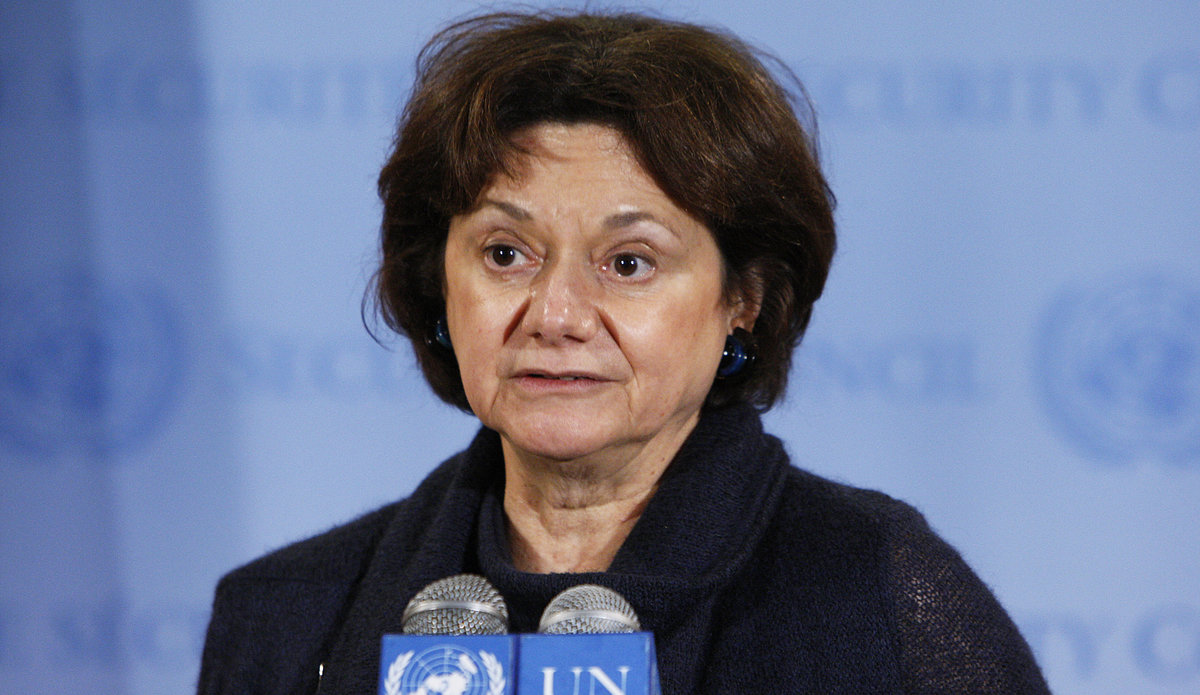
Rosemary DiCarlo
- On 28 June 2022, the Council’s Annual Open Debate on Working Methods took place. During the debate more than 40 experts expressed suggestions and concerns. including calls to review of sanctions regimes, suggestions to retain the position of “the pen-holder” and proposals to limit the use of the veto in cases of atrocities. Speakers declared that Council membership should better represent developing countries and unrepresented regions and raised the issue of transparency with regard to the number of closed Council meetings. Ireland, speaking on behalf of the 10 elected members of the Council, noted that targeted sanctions are an important tool, critical to executing the Council’s mandate. IT called for strengthened, fair and clear procedures in sanctions regimes. Ireland also called on all presidencies to strive for gender balance and diversity when selecting briefers, for clearer and more focused resolutions, and restraint in the use of the veto.
- On 28 June 2022, the Council held a meeting on the developments in Ukraine. Rosemary DiCarlo, the USG for Political and Peacebuilding Affairs, emphasised that civilians continue to pay the highest price in this war. The President of Ukraine, Volodymyr Zelenskyy addressed the Council via videoconference, detailing the most recent attacks by Russia in Ukraine. President Zelenskyy asked the United Nations to send a Special Representative of the Secretary-General, or an evidentiary commission to independently confirm the identify of those responsible for such events. He underlined that the UN Charter states that any member that violates its principles may be expelled yet the Russian Federation has still not held to account. He argued that Russia does not have the right to discuss and vote on the war in Ukraine, and he urged Member States to strip the Russian Federation of its powers. Ireland recognised the important role of the ongoing investigation of the International Criminal Court in helping to pursue accountability for such violations. Ireland also called for full, safe and unhindered humanitarian access for humanitarian personnel to reach civilians, including those who choose to remain in Ukraine and those who are unable to depart.
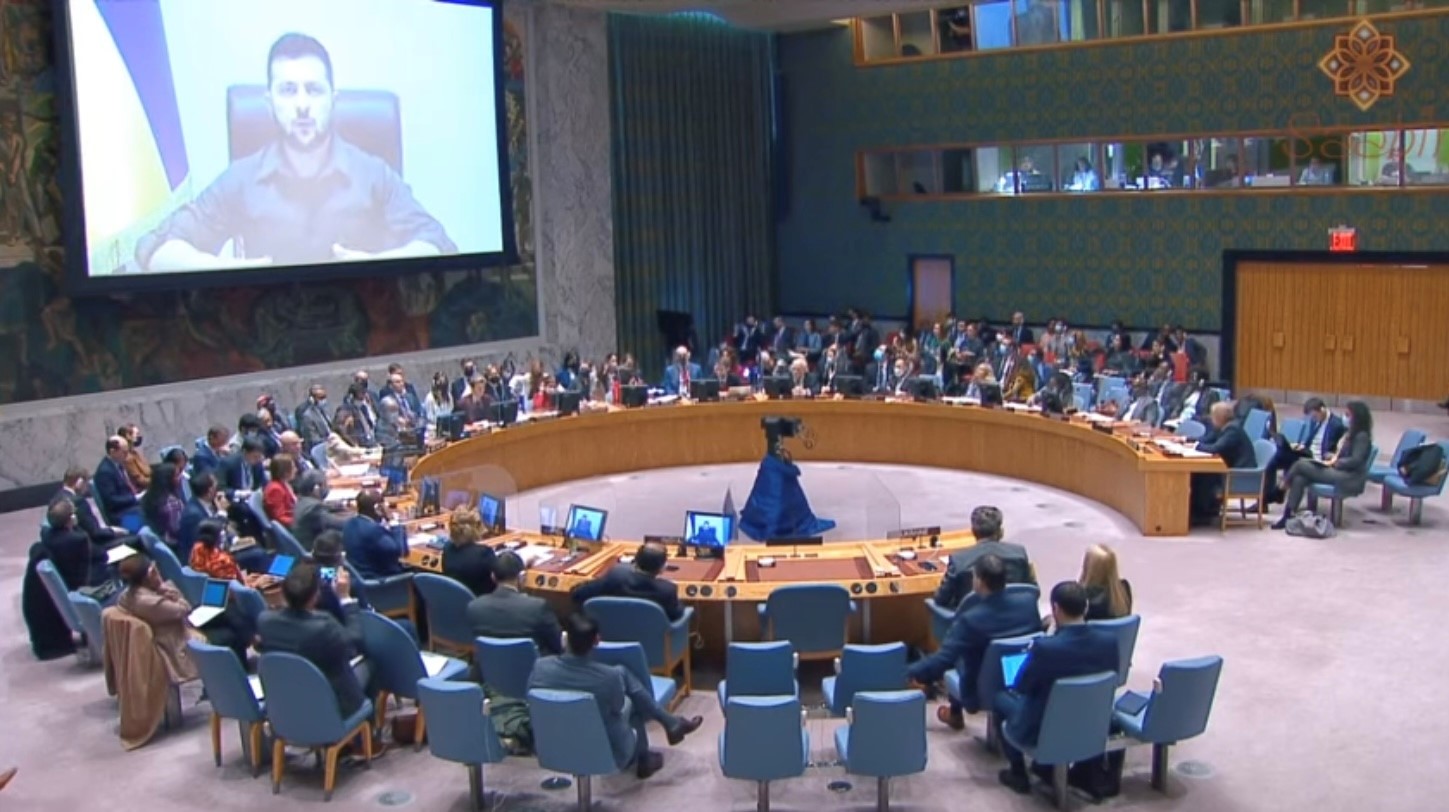
Volodymyr Zelenskyy, President of Ukraine
- On 30 June 2022, the Council met to discuss the Joint Comprehensive Plan of Action (the JCPOA). USG Rosemary DiCarlo briefed the Council and said that after many years of uncertainty, the JCPOA was now at a critical juncture, expressing hope that Iran and the United States continue to build on the momentum of the last few days of talks, facilitated by the European Union, in Doha, to resolve the remaining issues. Ireland presented its third report as the Facilitator for the implementation of resolution 2231 (2015). During the reporting period, no new proposals were submitted to the Council through the procurement channel, a mechanism established with the purpose of reviewing proposals by states seeking to engage in trade with Iran involving nuclear and non-nuclear civilian end uses. Citing the Plan as a major achievement in nuclear non-proliferation, Ireland noted that discussions between the parties are ongoing.
- On 1 July 2022, Brazil assumed the Presidency of the Security Council for the month of July. During the Brazilian Presidency, the Council will focus on issues including the crises in Ukraine and Syria, the renewal of peacekeeping or special political missions and sanctions regimes. Brazil’s priorities also include incorporating a gender perspective as a cross-cutting issue and inviting civil society briefers into meetings whenever possible. Brazil intends to organise meetings on food security, and children and armed conflict in July.
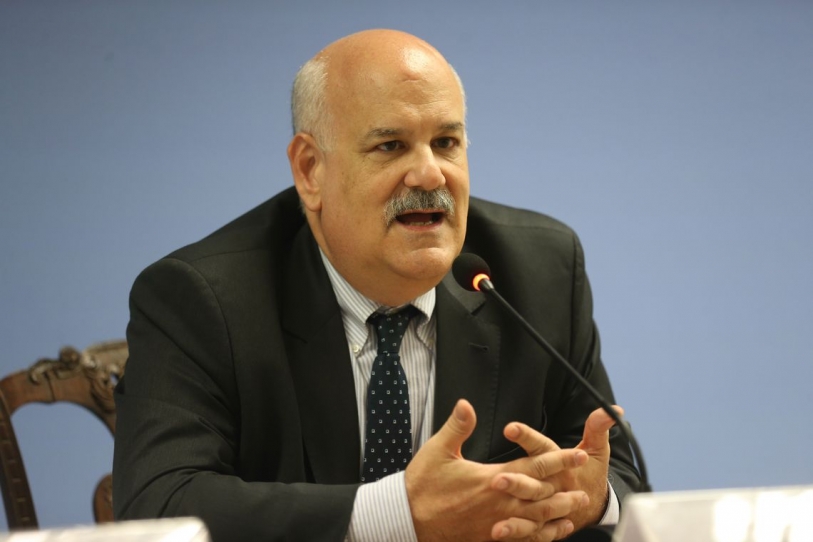
Martin Griffiths
The Week Ahead (4 July – 8 July 2022)
This week, the Council’s agenda is lighter, the renewal of resolution 2585 on the humanitarian situation in Syria is scheduled and the Council will hold a briefing and consultations on the UN Regional Office for West Africa and the Sahel (UNOWAS).
Monday – 4 July 2022
- No official meetings.
Tuesday – 5 July 2022
- The Working Group on Children and Armed Conflict will meet in a closed meeting.
Wednesday – 6 July 2022
- No official meetings.
Thursday – 7 July 2022
- The Council is scheduled to adopt a resolution on Syria (humanitarian), renewing resolution 2585, including the cross-border mechanism.
- The Council will hold a briefing and consultations on the UN Regional Office for West Africa and the Sahel (UNOWAS). The Special Representative of the Secretary-General and Head of UNOWAS, Annadif Khatir Mahamat Saleh, alongside the Chair of the Peacebuilding Commission, Rabab Fatima of Bangladesh, will brief the Council. Following the meeting, work will commence on the negotiation of the UNOWAS Presidential Statement, led by Ireland and co-penholder Ghana.
Friday – 8 July 2022
- No official meetings.