
The War in Iran: What’s next?
A joint U.S.-Israeli attack on Iran, followed by Iranian retaliation against U.S. military assets, Israel and other U.S. allies, has engulfed much of the Middle East in a conflict with global repercussions. Israel and the United States campaign’s immediate aim was to decapitate the Islamic Republic’s leadership, and it quickly achieved this goal. But the broader objectives of the operation are still clouded in uncertainty. What might be enough for them to declare victory is still unclear. Two months in, a weak ceasefire is in place, but outbursts of hostilities remain as the U.S. seeks to break the chokehold Iran has placed in the Hormuz Strait disrupting the global economy. Evidence points at Iran, the U.S. and Israel fighting different wars in the same territory making a lasting ceasefire very difficult.
This session draws on Crisis Group’s latest analysis to assess the trajectory of the conflict, examine the strategic calculations of the main stakeholders, and explore whether pathways to de-escalation remain viable—or whether the region is heading toward a more protracted and expansive war.
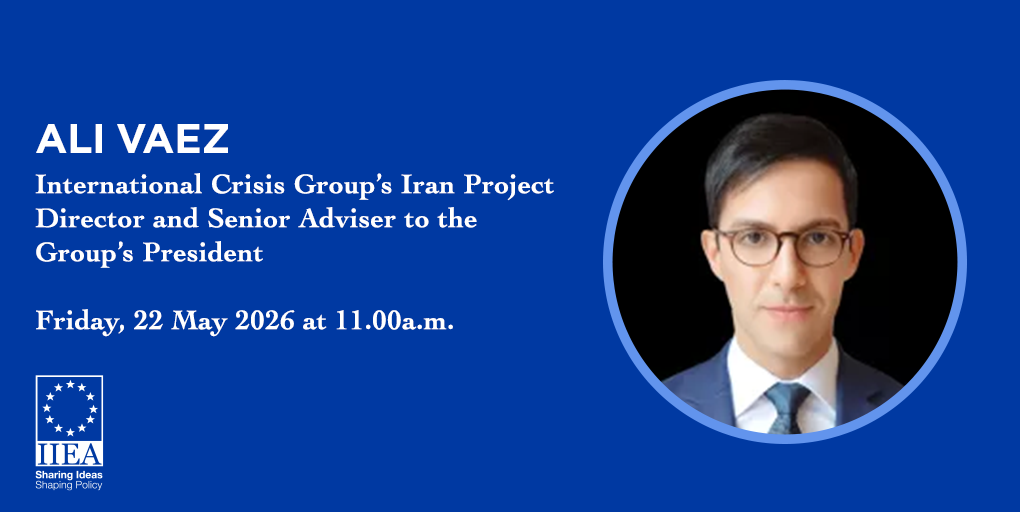
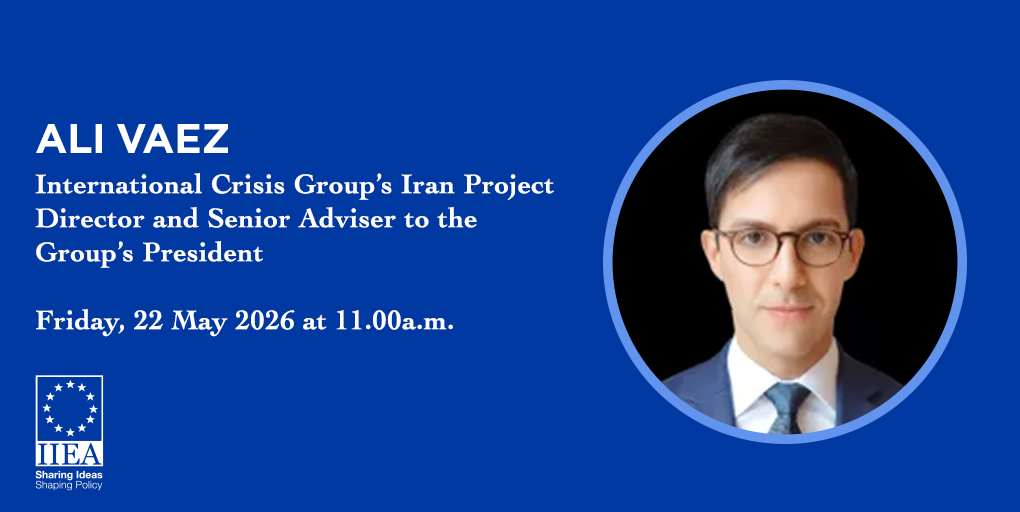
Ali Vaez is International Crisis Group’s Iran Project Director and Senior Adviser to the Group’s President. He led Crisis Group’s efforts in helping to bridge the gaps between Iran and the P5+1 that led to the landmark 2015 nuclear deal. Previously, he served as a Senior Political Affairs Officer at the United Nations Department of Political and Peacebuilding Affairs and was the Iran Project Director at the Federation of American Scientists. He is an adjunct professor at Georgetown University’s Edmund A. Walsh School of Foreign Service and a Fellow at the Foreign Policy Institute of the Johns Hopkins School of Advanced International Studies. He is a co-author of How Sanctions Work: Iran and the Impact of Economic Warfare.