

Kosovo’s Journey from Statehood to European Integration
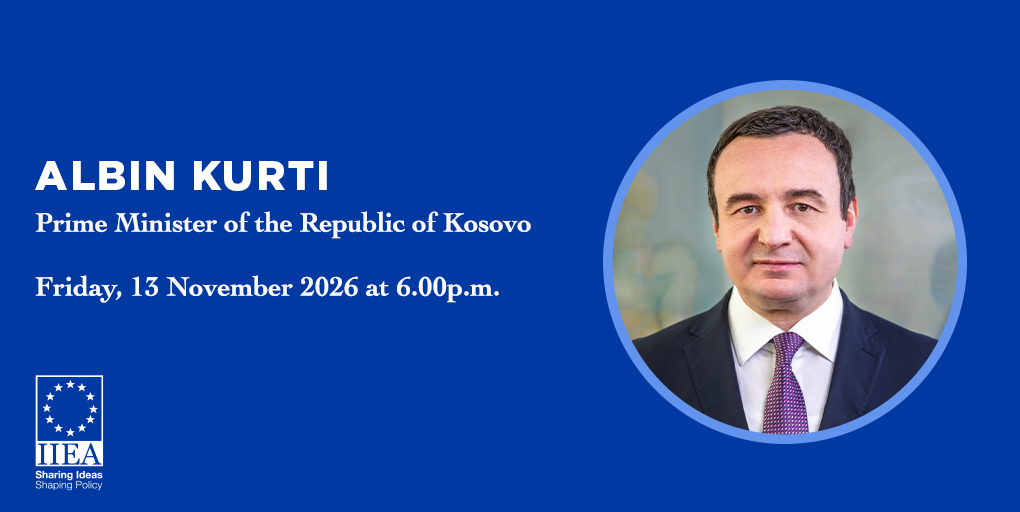
Since declaring independence in 2008, Kosovo has made significant progress in consolidating its statehood, strengthening democratic institutions, and advancing its European agenda. However, this pathway has been met with domestic and geopolitical challenges. In his first ever address at the IIEA, the Prime Minister of Kosovo, H.E. Mr. Albin Kurti, will reflect upon the country's reform efforts, especially during his time in office. The Prime Minister will also consider Kosovo's MR. opportunities and ongoing challenges, while outlining the country’s aspirations to transition from being one of Europe's most pro-European countries to becoming a full member of the EU.
H.E. Mr. Albin Kurti was elected Prime Minister of the Republic of Kosovo for the fourth time in September 2026, being elected first in February 2020. Before his time as prime minister, Mr. Kurti led the massive student protests in 1997 against the repressive Milosevic regime. Having been politically active during the war and serving as Secretary of the Office of the General Political Representative of the Kosovo Liberation Army (KLA/ UÇK). Mr Kurti was arrested by Serbian armed forces in April 1999 and he was released in December 2001, after spending two and a half years in Serbian prisons. Following his release, Albin Kurti continued his studies and in 2003 graduated with a degree in Computer Science and Telecommunications, from the University of Prishtina.
H.E. Prime Minister Kurti is the President of the biggest political party in the country, Lëvizja VETËVENDOSJE! (Self-Determination Movement) established initially as a citizens movement in 2005. In 2010 the party shifted its strategy, contesting the elections and securing the third place.
Albin Kurti served as Member of Parliament in three legislature terms between 2010 and 2019, during which he served as Chair of the Committee on Foreign Affairs.