

Germany’s Year of Reckoning
In 2026, Germany has faced a series of major political and societal shocks.
State elections in Saxony-Anhalt, Berlin, and Mecklenburg-Vorpommern in September served up losses for the coalition parties of the centre-right CDU and centre-left SPD. The far right AfD and leftist Die Linke parties both made significant gains and CDU Chancellor Friederich Merz enjoys record-low approval ratings touching single digits in nationwide polling.
In September, a major incident at Leipzig Airport in the east of the country was narrowly avoided when an explosives-packed Russian drone targeting a Ukrainian cargo plane failed to detonate. In October, the former chief of the country’s Federal Intelligence Service (Bundesnachrichtendienst) was arrested on suspicion of espionage and attempted treason. Newly digitized and AI-indexed Nazi Party membership records have allowed citizens to search millions of index cards and to confront family histories and legacies in way that has ushered in a renewed examination of the country’s past. The domestic situation regarding Palestine and the country’s support for Israel sees frequent protests, legal disputes, and tensions across society. In the summer, in a country that has so often triumphed in international sport, the country’s World Cup campaign fell well short of expectations, with Die Mannschaft exiting the tournament in the first knock-out round.
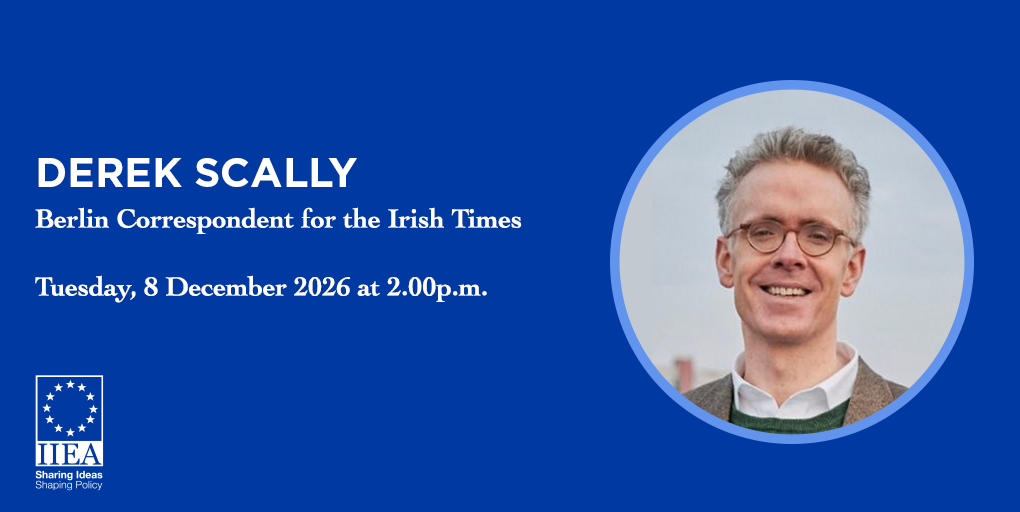
All this and more raises major questions for German politics, social cohesion, and foreign policy. At this end of year review, renowned journalist and Irish Times Berlin correspondent Derek Scally will take us through some of the moments that defined Germany’s political year and will consider what kind of Germany might emerge from this turbulent period and what this might mean for Europe and the rest of the world.
Derek Scally is a native Dubliner, who studied at Dublin City University and Humboldt University in Berlin. He has been Irish Times correspondent in Berlin since 2001. Covering politics, business and culture, he is a regular contributor to German news outlets, including Die Zeit weekly and Deutschlandfunk/WDR radio. He reports regularly from northern and central Europe and is also author of “The Best Catholics in the World”, published by Penguin.
This is a IIEA members-only event.