

Bosnia and Herzegovina: A Strategic Test for Europe
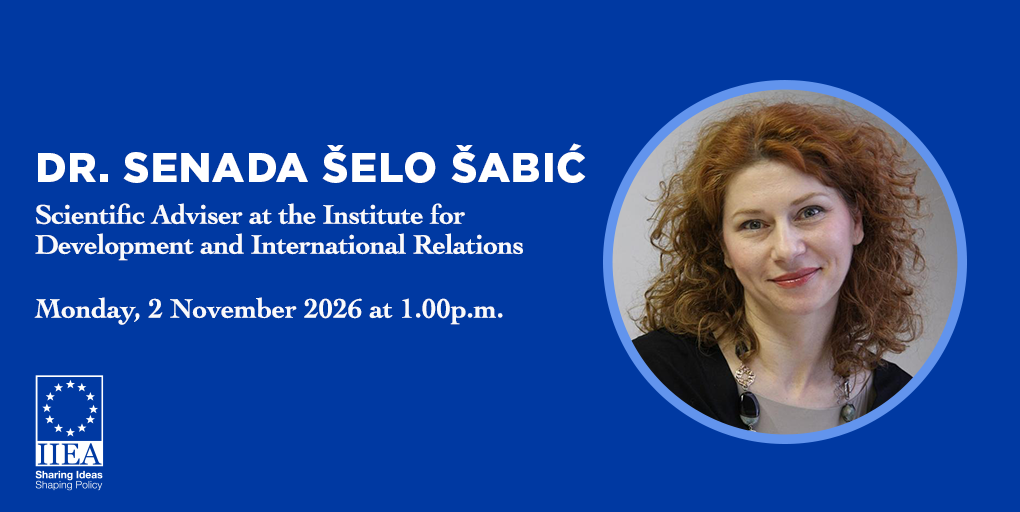
Debates on enlargement usually ask whether candidate countries are ready for the European Union. A more urgent question is whether the EU itself needs to be stronger and safer in a harsher geopolitical environment, and where candidate countries such as Bosnia and Herzegovina fit in that picture. Thirty years into its peace process, Bosnia has blocked institutions rather than a functioning state, and its political system is weaker now than at any point since the Dayton Accords. A fragile state surrounded by EU members leaves both Bosnia, and the Union, exposed to actors unfriendly to them. There are more of these actors than before, and new military and arms ties are forming throughout the region. In her remarks to the IIEA, Dr Šelo Šabić will argue that the EU should engage with Bosnia out of strategic self-interest, not sympathy for a small post-war country. She will discuss how since the EU has no resources to waste, it must choose carefully where it acts. Finally, looking beyond Bosnia to the wider Western Balkans, she will set out what local leaders are responsible for and what Europe can realistically do to change the current trajectory.
Dr Senada Šelo Šabić is a Scientific Adviser at the Institute for Development and International Relations (IRMO) in Zagreb, where she heads the Centre for Migration Studies. Born in Bosnia and Herzegovina, she has worked on the country and the wider Western Balkans for over thirty years as an academic and policy analyst. Her research focuses on EU enlargement, foreign policy, and migration. She holds a PhD from the European University Institute in Florence and is a member of the European Council on Foreign Relations.