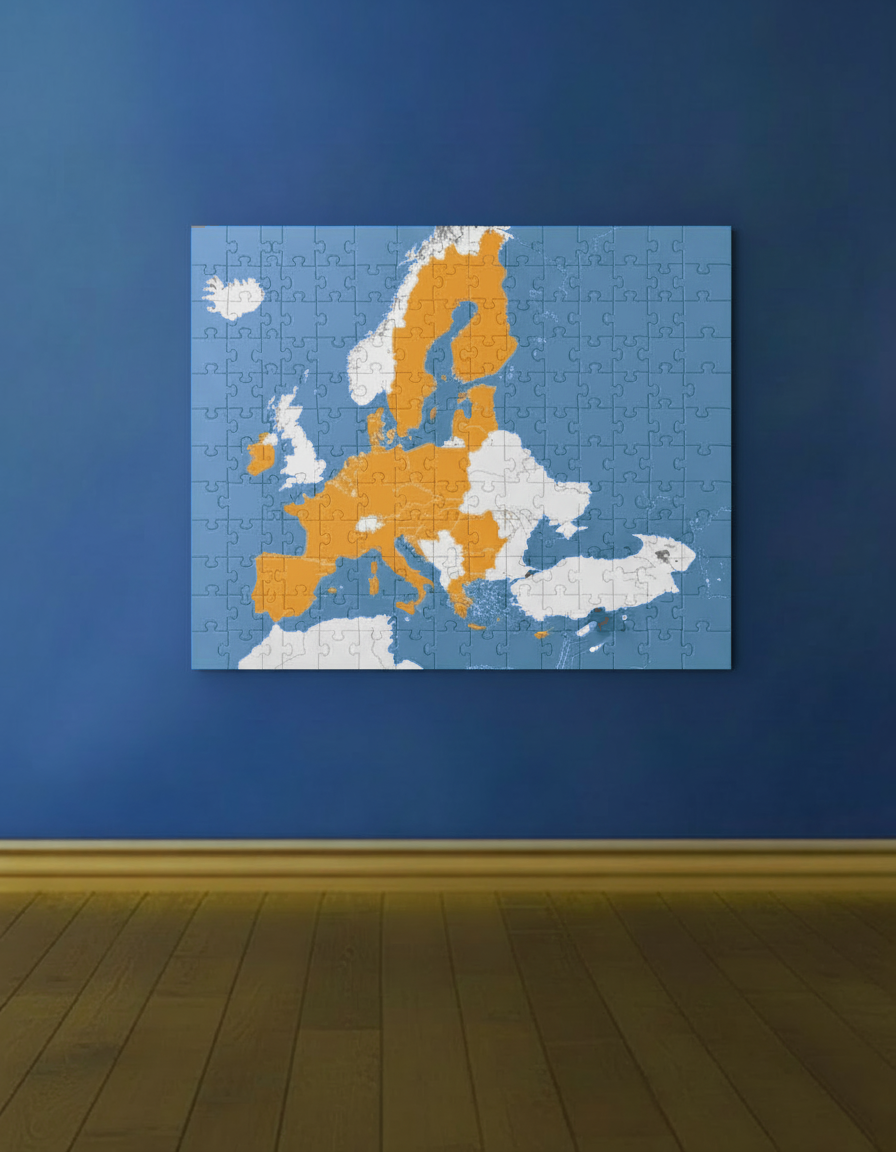

The European Union in 12 Objects 7. A Jigsaw Puzzle
 Bobby McDonagh, Former Ambassador to the EU and UK, has developed a series of blogs, to explain what the European Union is and how it works. The publication of this blog series by the IIEA will be phased over 12 weeks, each dealing with one of the 12 Objects. Find out more here.
A suitable object to represent the European Parliament would be a jigsaw puzzle. If the Parliament were disassembled into all its constituent pieces, it would be difficult to see how that multitude of diverse pieces could be reassembled to constitute a coherent overall picture. Yet, with all its intricacies and diversity, the European Parliament jigsaw does work.
It stands out as the only significant democratic, directly-elected supranational parliament in the history of the human species.
 © European Union 2018 - European Parliament creativecommons.org/licenses/by-nc-nd/4.0/
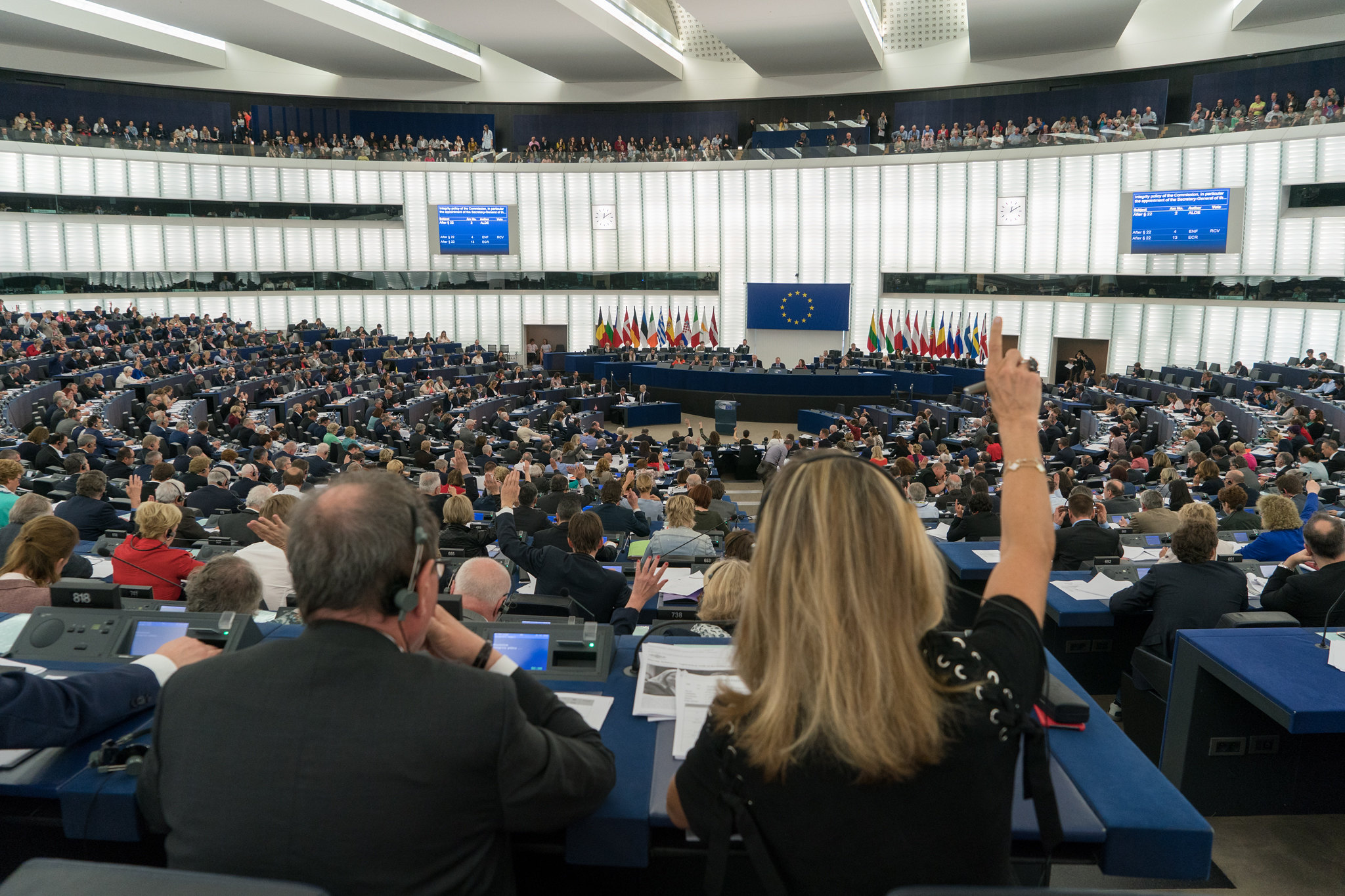
The European Parliament is an essential part of the democratic nature of the European Union. Democracy at European level is essential since, with the agreement of all Member States, that is the level at which many decisions are now taken. However, it is by no means the only important democratic element in the operation of the European Union since the Council and European Council are composed of representatives of the 27 Member States who are answerable to their electorates.
Composition
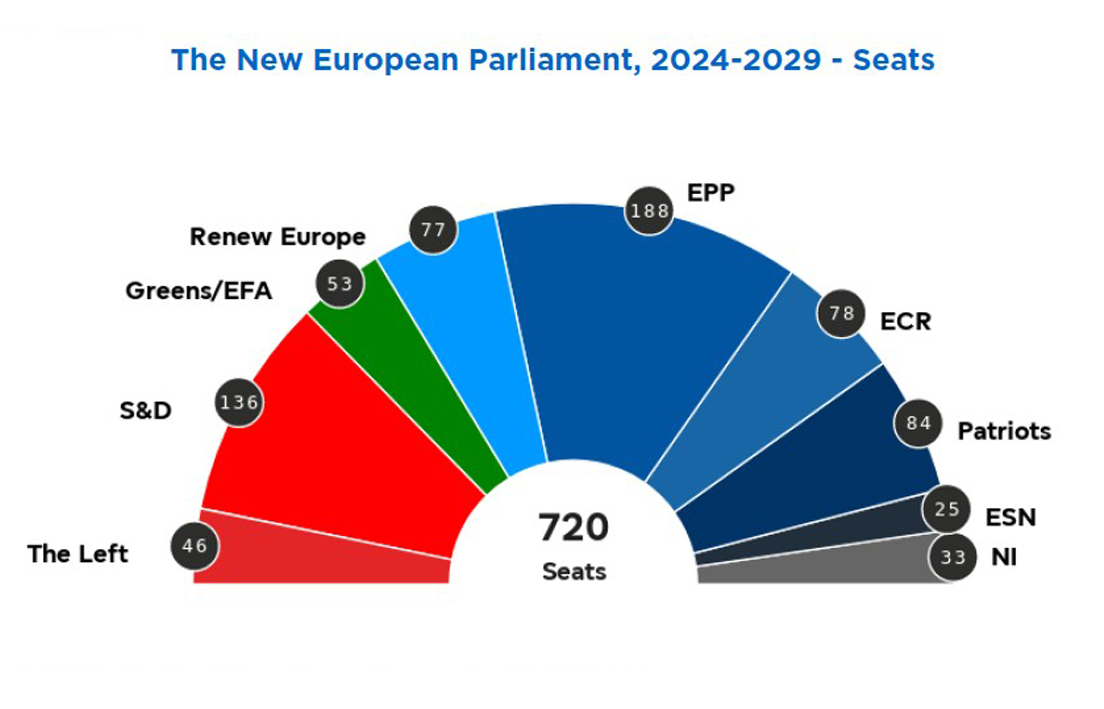
The European Parliament has 720 members, usually referred to as “MEPs”, elected by the citizens of the 27 Member States once every five years. The most recent election was in 2024. Each Member State uses its own electoral system in that election. Ireland uses the Single Transferable Vote system as in our national elections.
The electorate, in addition to being spread across 27 countries, is the second largest democratic electorate in the world, after India.
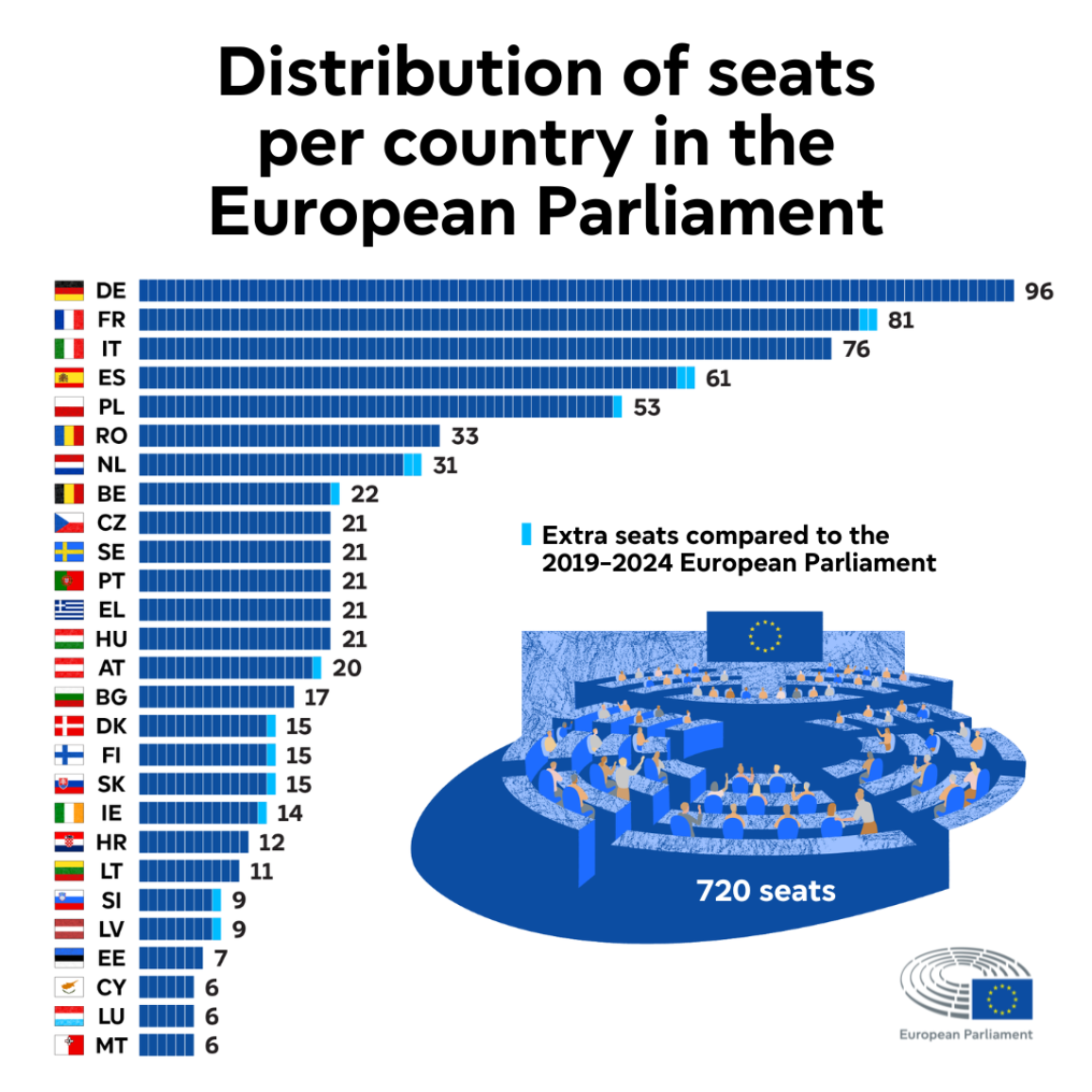
Each Member State is allocated seats in the Parliament based on its population size. However, the population calculation is weighted in favour of smaller Member States: the smaller a country, the fewer citizens are required to elect an MEP. Or, to put it another way, the smaller a country’s population, the higher the influence per voter in electing members of the European Parliament.
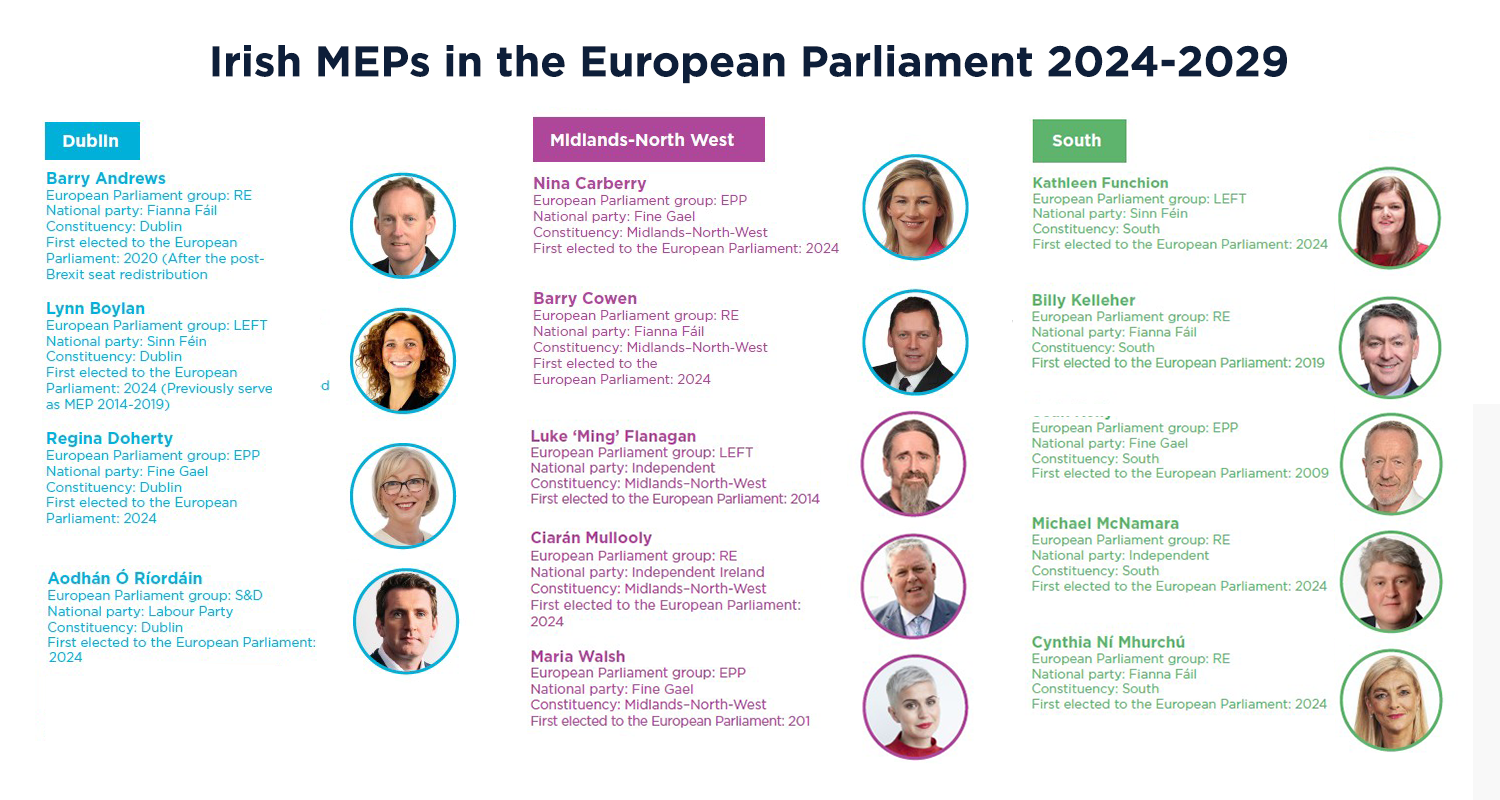
Germany, with 96 MEPs, has the largest number. The three smallest Member States have 6 each. Ireland elects 14.
© 2024-2029 European Parliament: how many MEPs per country? | Topics | European Parliament - European Parliament creativecommons.org/licenses/by-nc-nd/4.0/
Political Groups
Like the other major EU institutions (the Council of Ministers and the Commission, see Blogs 3 and 5 respectively), the European Parliament reflects in its own way the balance between European and national interests. MEPs naturally attach importance to the interests of their own home Member State, whose citizens elected them and to whom they will be accountable at the next election. At the same time, most of them, some more than others, are aware that they also have a significant responsibility to the wider European interest.
However, MEPs also have an additional, hugely important, allegiance, namely to their Political Groups. Members of the European Parliament organise themselves not into national factions but into ideological groups.
There are currently eight political groups in the Parliament (as well as a small number of independent MEPs). These Groups broadly reflect the ideological differences that are thrashed out at national level in national elections.
The principal advantage of belonging to a Political Group in the European Parliament is that it increases an MEP’s potential influence, given that majorities in the Parliament depend very significantly on what deals are negotiated between the Political Groups and on how they vote. Groups are also accorded some procedural privileges, some financial support, and a staff allocation.
Currently, the two largest Political Groups are the European People’s Party (EPP) and the Progressive Alliance of Socialists and Democrats (S&D). Eurosceptic parties and parties tending towards the far right increased their representation in the Parliament in the 2024 election. This in turn is reflected in the composition of the Parliament’s Political Groups. However, less extreme and pro-European MEPs of the left, centre and right, and the Political Groups to which they are affiliated, still maintain what is, for the most part, a majority in the European Parliament .
 Source: A Post Election Guide to the European Parliament Elections 2024-2029 | IIEA
Source: A Post Election Guide to the European Parliament Elections 2024-2029 | IIEA
European Political Parties
The Political Groups in the European Parliament mirror, to a significant extent, the “European Political Parties” that are organised, outside and beyond the European Parliament, at broad European level. Through those “European Political Parties”, there are regular meetings, outside formal EU structures, between representatives of those national governments that share a political ideology.
For example, those Heads of State or Governments whose national parties belong to a particular European Political Party meet in advance of every European Council. While such meetings are of increasing significance, those ideological political affiliations are still less important within the Council and European Council than the pursuit of national agendas. By contrast, in the European Parliament, affiliation to a Political Group tends to be the predominant allegiance.
How the Parliament Operates
The European Parliament elects its own President. The President presides over its plenary sessions, ensures the Parliament’s rules are adhered to, and represents the Parliament in its dealings with the other EU institutions and with the wider world. The President is assisted by 14 Vice Presidents who constitute the Parliament’s Bureau.
The Parliament establishes a few dozen Standing Committees, each covering an area of the European Union’s responsibilities. The Parliament’s Agriculture Committee, for example, examines agricultural issues; its Committee on Budgets budgetary matters, and so on. The composition of each Committee reflects proportionately the overall political make-up, as between Political Groups, of the Parliament.
The Committees develop expertise in every area of the Union’s competences and prepare the work and eventual resolutions of the Parliament’s plenary sessions. Committees appoint a “rapporteur” for each significant report they are working on. These “rapporteurs”, each working in their own areas, shape much of the Parliament’s output.
Individual MEPs have significant potential to influence the European Parliament, often more influence than individual backbenchers in national parliaments. MEPs can do this through their role as “rapporteurs” on particular issues, through their influence within their Political Groups and, sometimes, through their personal standing in plenary.
John Hume, although the only SDLP MEP at the time, was one of the most influential members of the European Parliament. Pat Cox, elected as an independent MEP in 1994, went on to become the President of the European Parliament. The current President comes from the Member State with the smallest population, Malta. The point worth noting is that an MEP who is intelligent, knowledgeable, and politically astute can exercise real influence. An MEP who prioritises a high domestic profile is likely to have no real influence whatever.
Location of the European Parliament
Like the other institutions, the Parliament has its own Secretariat composed of permanent officials who support the work of Committees and of the Parliament as a whole.
The European Parliament faces the awkward challenge of organising its work across three cities. It’s regular monthly plenary sessions, attended in principle by all MEPs, take place in Strasbourg, while several additional plenary sessions take place in Brussels. The Parliament’s Committees generally meet in Brussels and its Secretariat is spread between Brussels and Luxembourg.
The European Parliament itself has pressed for this merry-go-round to be resolved but the Member States have been unable to resolve the issue because of the intractable sensitivities of the Member States most concerned – France, Belgium, and Luxembourg. If the European Union were a “business”, a single location for the Parliament would have been settled long ago. The EU is not, however, a business but a delicate and complex experiment in which the sensitivities of individual countries must be respected.
No other EU institution faces a similar geographical challenge, although the Council of Ministers, which normally meets in Brussels, meets - for similar reasons of historic national sensitivities - in Luxembourg in April, June, and October.
The Parliament’s Role and Influence in the European Union
The European Parliament’s most important role is in the legislative area, in relation to which the Parliament is assigned distinct roles on different matters.
Its greatest legislative powers are under the co-decision procedure in which the Parliament acts a co-legislator with the Council of Ministers. Following a complex negotiation between those two institutions, in which the Commission is also involved as the initiator of the legislation, both the Parliament and Council must approve an identical legal text before it becomes law. The co-decision procedure applies to a wide number of areas that have expanded with each EU Treaty, including now the internal market, the environment, and agriculture.
In areas where the consultation procedure applies, the Parliament is just consulted for its opinion.
The consent procedure gives the Parliament a veto over certain acts.
The European Parliament also has a highly influential role in the negotiation of the EU’s budget. It is now on an equal footing with the Council of Ministers in the annual budgetary procedure. Moreover, it must give its consent to the Multiannual Financial Framework that shapes the EU’s long-term budgetary planning.
The Parliament has another important role in relation to scrutinizing the EU’s executive, that is the European Commission. Parliament must at the outset approve the European Council’s nominee for President of the European Commission and subsequently the appointment of the Commission as a whole. It also has the right, voting by a strengthened majority, to censure the European Commission, thus forcing its resignation.
The European Parliament has over many years been skilful and determined in exercising these and other competences. Individual Commissioners have, for example, been withdrawn between their initial nomination and approval of the Commission as a whole due to objections by the European Parliament. While the Parliament has never passed a motion of censure on the Commission as a whole, its imminent threat to do so in 1999 forced the resignation of the Commission led by Jacques Santer. The threat of a possible censure motion plays an important part on an ongoing basis in the strategy of Commission Presidents and in relations between the two institutions.
The European Parliament can put oral or written questions to the Commission, the Council and the President of the European Council. Its role in relation to the Union’s Common Foreign and Security Policy is limited although it must be consulted on certain key aspects.
The European Parliament also organises dialogue with national parliaments.
A jigsaw therefore seems to be the most appropriate symbol for the European Parliament which, amongst the EU’s many complex institutions, is probably the most complex of all. With 720 members from 27 countries, with its eight political groups, with its several dozen Committees, and with its work scattered across three countries, it is remarkable that it functions at all, let alone with an effectiveness that strengthens the democratic nature of the European Union and very much keeps both the Commission and Council on their toes.
Like a jigsaw puzzle, the various pieces that make up the Parliament seem impossibly fragmented; and yet, month by month as the Parliament plenary meets, they are brought together into an efficient and coherent whole.