

The European Union in 12 Objects 5. The Rubik’s Cube
Bobby McDonagh, Former Ambassador to the EU and UK, has developed a series of blogs, to explain what the European Union is and how it works. The publication of this blog series by the IIEA will be phased over 12 weeks, each dealing with one of the 12 Objects. Find out more here.
Because of the European Commission’s rich complexity, the object I have chosen to represent it is a Rubik’s Cube. The Commission is very much a three-dimensional puzzle. The number of moves that can be made within the Commission seems infinitely variable.
However, unlike the popular puzzle, the Commission Rubik’s Cube is one that no one will ever be able to fully solve. There is ultimately a logic to the Commission’s unique kaleidoscope of motivations, identities and procedures. Its output usually reflects an impressive degree of coherence. However, the Commission is too complex for its subtle functioning and diverse dimensions ever to be fully rationalised and resolved, like a traditional Rubik’s Cube, into a perfectly coordinated cube with each side a single coordinated colour.
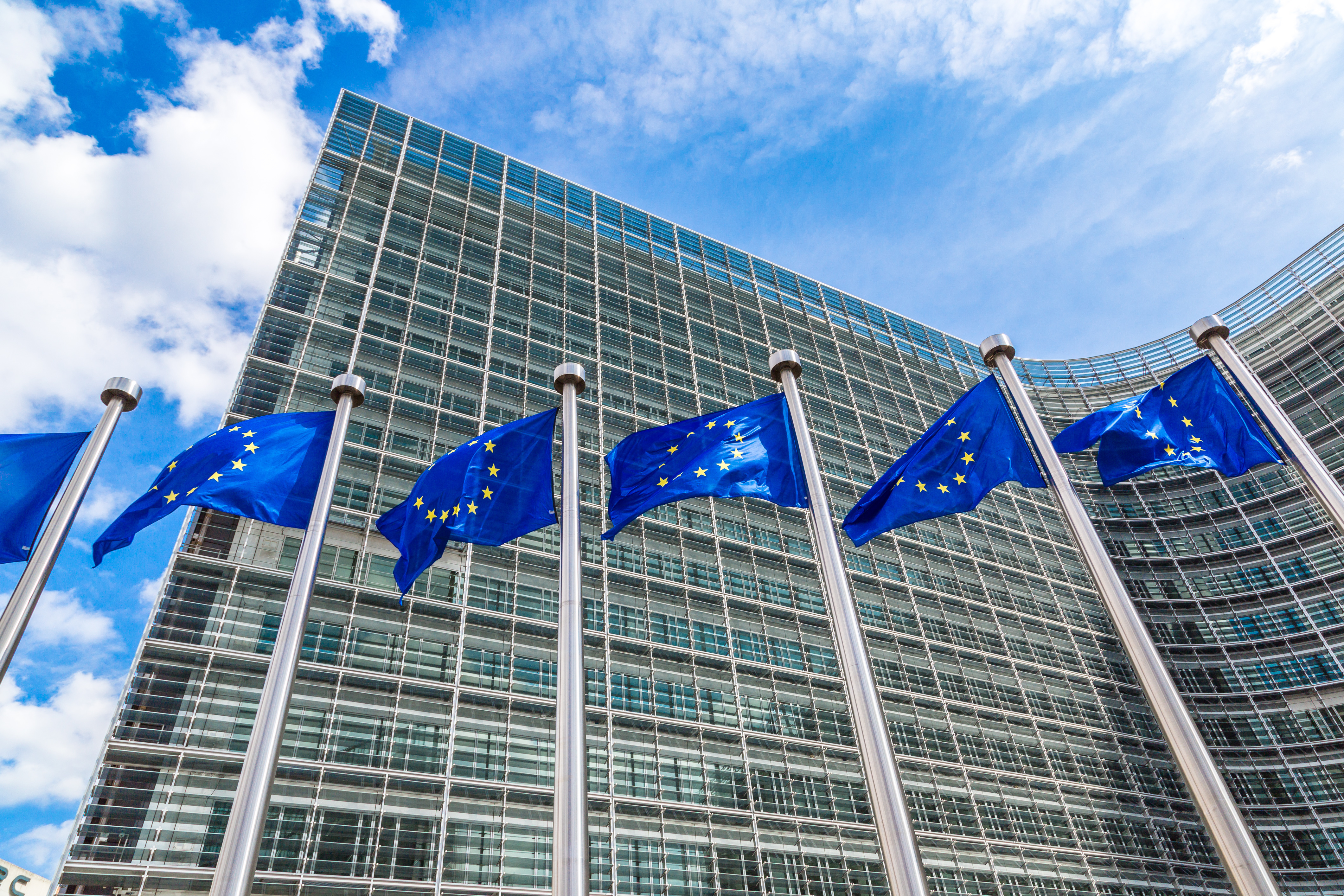
The Commission is the European institution that, more than any other, alongside the European Parliament, represents the European interest.
In contrast to the Council of Ministers, in which representatives of the Member States advance their national interests, while taking account of the European dimension; the European Commission promotes European interests, while taking account of the national dimension.
Role of the European Commission
The Commission plays an important role in enforcing European law. It is responsible for taking any Member State before the European Court of Justice (ECJ) if it believes that country is in breach of European law. For example, a Member State may fail to implement a binding European law or may do so incorrectly or belatedly. The Commission takes such action very frequently, against large and small Member States alike. Likewise, the Commission takes businesses and other entities before the ECJ if it believes they are in breach of EU law.
Importantly, the Commission alone is responsible for proposing new laws. It does so based on what it perceives to be the European interest and taking account, as appropriate, of any views expressed by the European Parliament, by the Council, by individual Member States or by representatives of civil society.
It implements and manages EU policies and funding. It has more than 30 Departments (“Directorates General”) and 30,000 staff that enable it to carry out those and other functions. That number of personnel, although large, is only a fraction of the total number of people employed by, say, the French postal service.
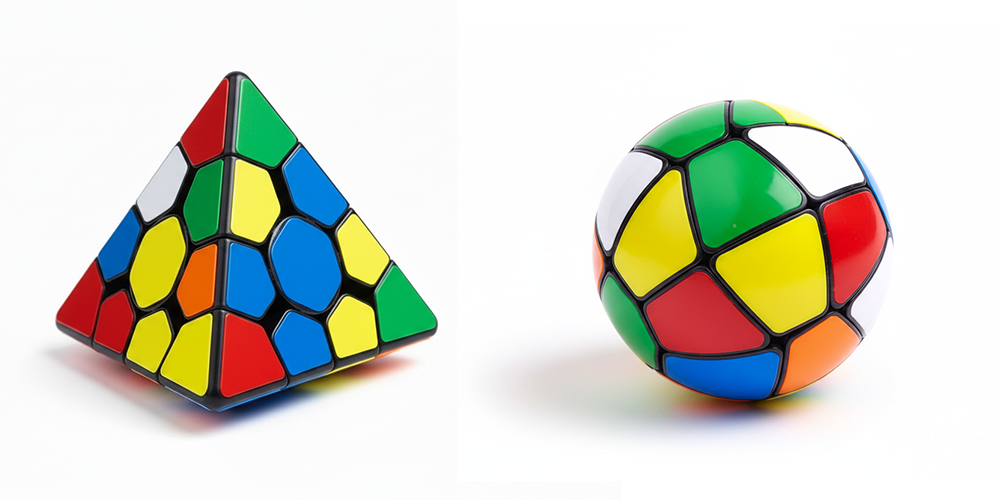
The Commission staff are headed by a Secretary General. Two of the recent Secretary Generals, David O’Sullivan and Catherine Day, have been Irish.
Importantly, the Commission has essentially sole responsibility for managing the EU’s competition policy, working in cooperation with national competition authorities. Its responsibility is to ensure that all companies operating in Europe compete equally and fairly on their merits.
In that context, it is responsible, for example, for approving or rejecting certain proposed mergers and for determining whether “state aids” given by individual Member States to their own national companies may be distorting fair competition across the EU.
Unlike in most other areas, in which the Commission proposes and the Council and Parliament then decide, the Commission is empowered by the Treaties to act alone on these particularly sensitive and contentious competition matters in order to ensure that the pursuit of objective European interests in relation to fair competition is not undermined by the special pleading by, and horse-trading between, Member States that would otherwise inevitably predominate.
The Commission plays an important role in representing the EU internationally, including by playing the leading role on the EU’s trade policy.
Membership of the Commission
The Commission has 27 members, called “Commissioners”, one nominated by each Member State.
There has long been a debate about whether to prioritise the “representativity” and “legitimacy” of the Commission, by ensuring that there is a Commissioner from each Member State, or whether to prioritise “efficiency” by appointing a Commission with a smaller number of members that would be more compatible with streamlined decision-making and with the number of substantive portfolios.
Some years ago, the Member States designed a possible Commission with the number of its members smaller than the number of Member States, but in which the right to nominate Commissioners would rotate on a strictly equal and legally-binding basis between the Member States. However, this solution was never implemented, and the Member States have, for now and for the foreseeable future, come down in favour of the present arrangement, namely one Commissioner nominated by each Member State.
Independence of the Commission
Commissioners are nominated by individual Member States, in consultation with the Commission President, who then selects a team of Commissioners and allocates portfolios to each of them.
Commissioners, however, despite a frequent public misperception in that regard, do not represent their own Member State. Each Commissioner is obliged to take an oath (“solemn declaration”) before the European Court of Justice in which they solemnly undertake to respect the EU Treaties, to be completely independent in carrying out their responsibilities in the general interest of the Union, and neither to seek nor take any instruction from any Government or from any other body. Officials of the European Commission are similarly bound to be independent in the conduct of their employment.
However, every European Commissioner and official can, at the same time, bring a national perspective to bear on their job. This is subtly, but vitally, different from advancing narrow national interests. The Commission, like the EU as a whole, aims to reflect the aspirations and cultures of 27 diverse Member States. It is more effective in that regard to the extent that that diversity is reflected in its own make-up.
Irish employees of the Commission, for example, spend most of their time on issues that have little or no specific Irish dimension. However, they can, occasionally, bring arguments to bear within the Commission that may help to vindicate a specific national concern. They can only do this with any hope of being listened to if they have convincing objective arguments to put forward. It would be foolish and counterproductive for European officials to argue that something must be done simply for reasons of the national interest of their country of origin. However, they can, when appropriate, point out the unforeseen consequences of a proposal, argue for consistency, highlight sensitivities, assert relevant precedent, and where necessary, act as a counterweight to other national perspectives.
Rational argument is more central to deliberations in the Commission than in other European institutions in which the laudable pursuit of compromise is necessarily paramount.
Decision-making in the EU Commission
Two important factors shape the European Commission’s decision-making process.
First, all decisions of the Commission are collective decisions taken by the Commission college as a whole, that is by all 27 members of the Commission. The Commission meets around the Commission table every week to make the most important decisions.
The work of the Commission college is prepared by the Commissioners’ “cabinets”, or private offices. Each Commissioner has a small “cabinet” of 6 or 7 officials, necessarily comprising several nationalities. These “cabinets” work closely with and directly to their Commissioner. They are separate from the much larger Directorates General, somewhat similar to Government departments, that also work for their responsible Commissioner or Commissioners. The 27 “chef de cabinets” (heads of cabinet) meet in advance of every meeting of the Commission. Meetings of ordinary “cabinet” members take place more frequently.
The Directorates General are the repositories of expertise in all areas of the Commission’s responsibility and play the central role in initiating, shaping and implementing the Commission’s agenda.
Only the most important or disputed issues are discussed and agreed at the Commission’s weekly meeting. However, the important collective nature of all of its decisions, which are far too numerous to be the subject of discussion by Commissioners, is maintained by many issues being “nodded through” without discussion at the Commission’s weekly meeting; or by the extensive use of “written procedures” whereby the final version of proposals agreed at a lower level are circulated to all Commissioners, each of whom then has the opportunity to block the proposal and insist on its further consideration by the College of Commissioners. The Commission as a whole can also agree to delegate certain precisely defined decisions to a specified Commissioner or group of Commissioners.
The second factor that shapes the Commission’s decision-making is that every decision (apart from those relating to senior personnel appointments) can be taken by simple majority. This is quite different from the Council of Ministers where decisions require either unanimity or qualified majority support. Since, in principle, the support of only 14 of the 27 Commissioners is required for a proposal to pass, it is far easier to reach decisions within the Commission.
The availability of this simple majority voting in the Commission means that, in practice, matters very rarely actually need to be put to a vote. Since it normally becomes obvious at a relatively early stage of the institution’s deliberations that there are an insufficient number of Commissioners to block a proposal, and since there is normally no benefit to be gained from the minority fighting a losing battle, an overwhelming majority of proposals go through the Commission by consensus. Commissioners who are less than happy with a proposal tend to focus on seeking helpful amendments rather than pushing the matter towards a doomed vote.
The Extra Dimension of the Rubik’s Cube
I have always seen the internal workings of the Commission as having an extra dimension in comparison with the other European Union institutions. Like a Rubik’s Cube, the Commission’s decision-making processes have an additional third dimension, namely, the need to understand motivation.
In the Council of Ministers, there is rarely any doubt about motivation. A Portuguese representative, for example, sits behind the Portuguese nameplate and represents the interests of the Portuguese Government. Of course, the definition of those national interests may sometimes be complex and the negotiating strategy sometimes difficult to read. However, the motivation is clear.
In the Commission, the extra dimension constantly comes into play.
I worked as a “cabinet” member with two Irish European Commissioners. When the member of another cabinet spoke at a meeting of the 27 cabinets there was always, in my mind, a need to understand the motivation. Was the colleague representing their Commissioner’s view (the most obvious possibility)? Or their Directorate General’s view (not necessarily identical to that of their Commissioner)? Or a national angle or sensitivity? Or their personal view? Or were they perhaps reflecting an informal deal they had made on another issue with someone else around the table? Or could they occasionally also have one eye on the advancement of their career?
This challenge of identifying motivation reflects the role of the Commission at the heart of the exciting complex machinery of the European Union. The Commission, more than the other EU institutions, is the fulcrum of the tension between European and national interests. It is arguably the most original element of all the institutional arrangements established by the Treaties.
The EU’s institutions were designed to embody the unique nature of the European Union, namely a Union of 27 sovereign democratic countries that have chosen freely to pool carefully defined aspects of their sovereignty. The Commission, an independent body designed to advance the shared European interests of all the Member States, while respecting their independence, is unique in the history of relations between nations.
That complexity at the very heart of the Commission, which bears much of the weight of the EU’s nature and ambitions, is to be celebrated. Because of its complexity, the Commission’s way of doing business is, perhaps surprisingly, more “competitive” than that of either the Council of Ministers (see Blog 3) or the European Parliament (see Blog 7). In the Commission, starkly competing drafts of the same proposal often vie with each other over many months across the vast machinery of the Commission. Information is power. The relations between different parts of the Commission can sometimes seem more like confrontation than cooperation. However, the dedication and ingenuity of generations of Commissioners and Commission officials, and quality of their output, has robustly stood the test of time.
The Commission is a remarkably ‘open’ organisation - open to businesses, to civil society groups and to other interest groups, far more open than most national civil services including, say, the Irish civil service. It is willing to listen and explain. In my years working in Brussels, I heard many people disagreeing with the Commission, but I don’t recall anyone complaining that they hadn’t got a reasonable hearing.
As the Size of the European Commission Grows
As new Member States have joined the European Union, and with the principle of each country nominating a Commissioner being maintained, the size of the European Commission has grown, now comprising 27 Commissioners.
This has had a number of consequences.
Since the number of truly substantive portfolios is now significantly fewer than the number of Commissioners, some Commissioners are now necessarily allocated limited responsibilities that are somewhat less weighty than each Commissioner would generally have received when there were fewer members of the Commission.
Moreover, since the size of the Commission is now much larger than would be ideal from a purely managerial point of view, the President of the Commission, in order to ensure the effectiveness and coherence of its work, appoints a number of Vice Presidents, each of whom is allocated overall responsibility for the work of several other Members of the Commission. While each Commissioner is still a full member of the Commission college, this hierarchy of responsibilities has been a growing feature.
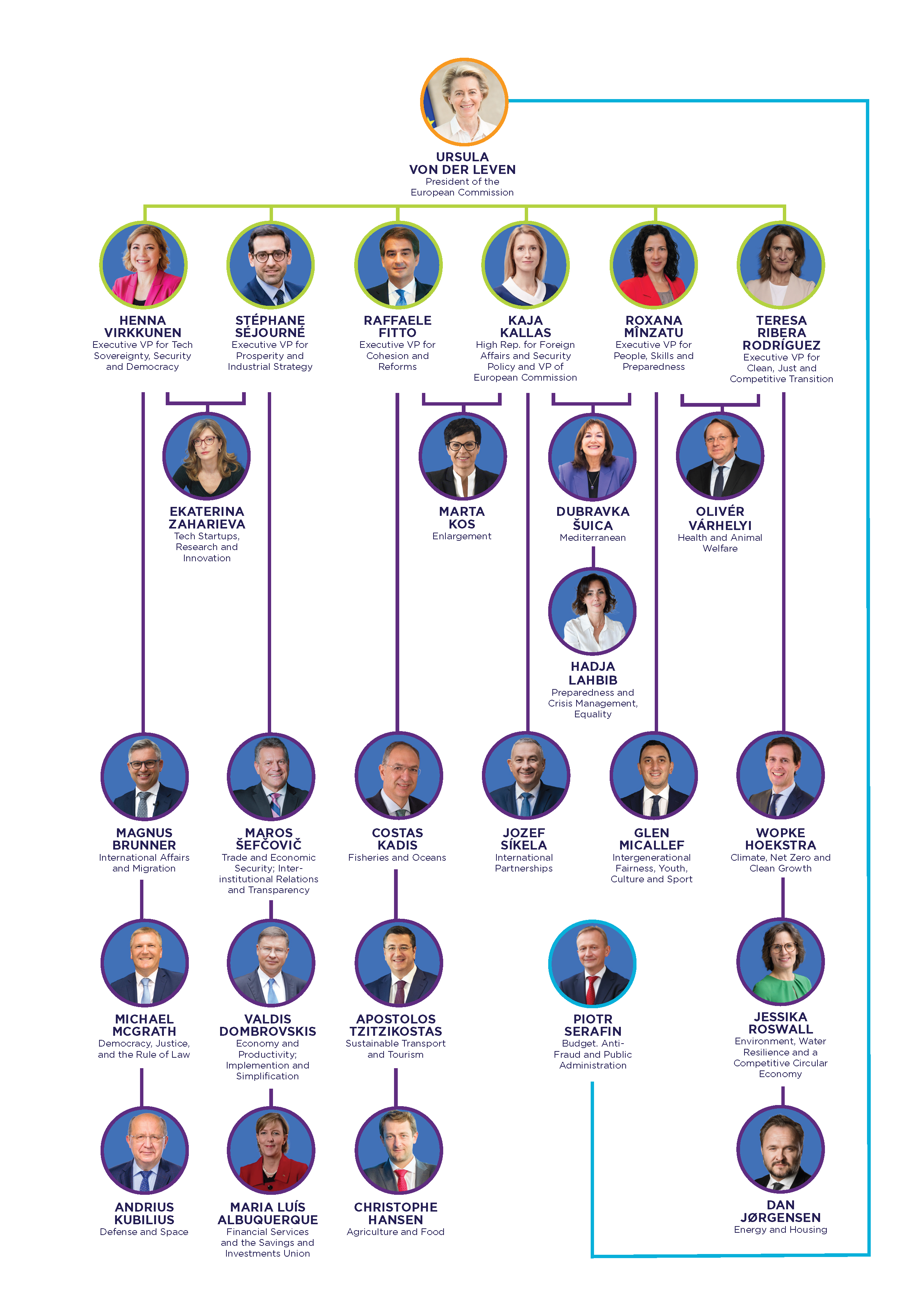
Source: An Ugly Cobweb or A New Broom: An Analysis of the Structure of the New Commission | IIEA
Perhaps most importantly, in order to counteract the potential unwieldiness of such a large body, it has been necessary for more control and tighter coordination to be exercised by the President. The current Commission President, Ursula von der Leyen, has grabbed that bull by the horns effectively and more forcefully than her predecessors.
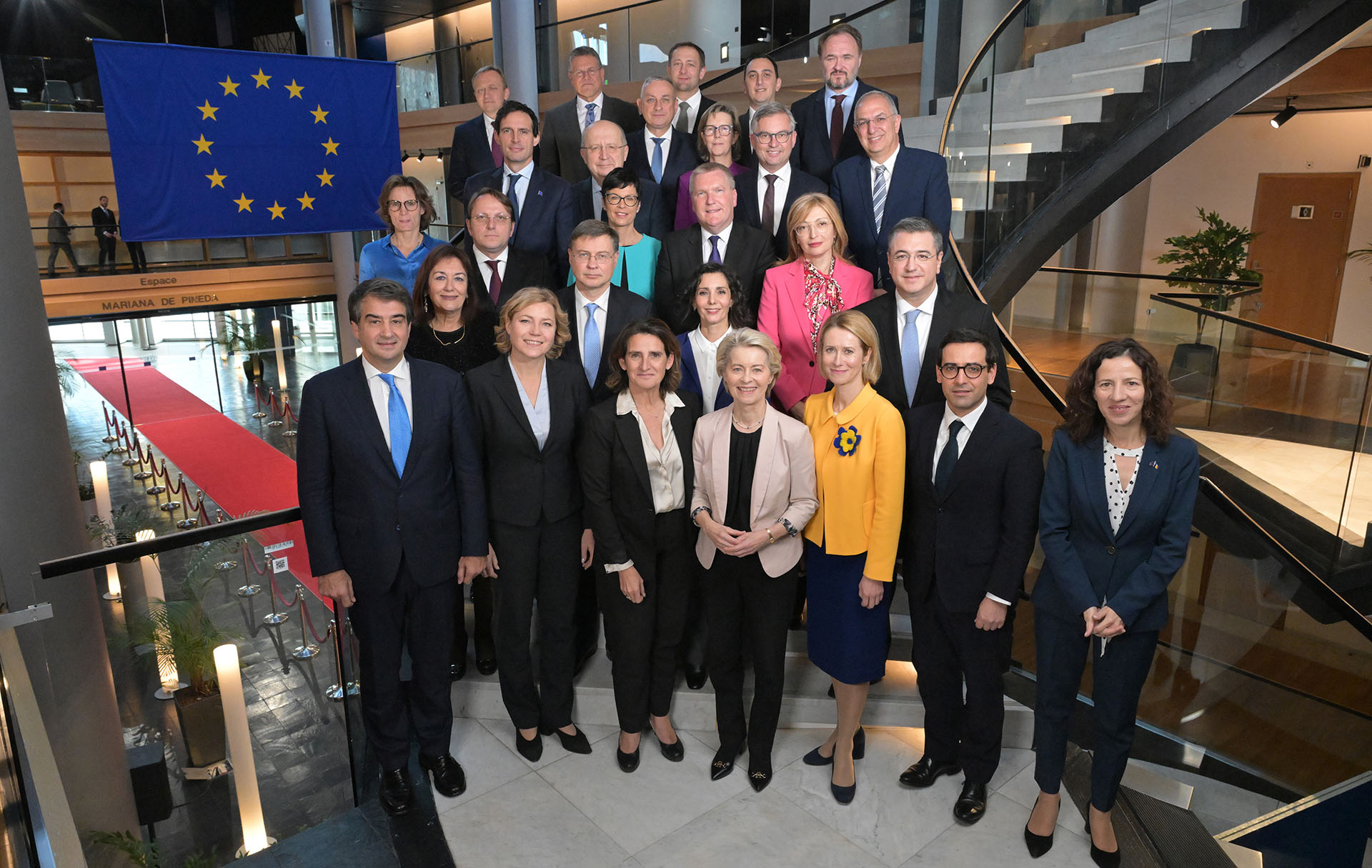 Source Chapter 0: Staying the course — The EU in 2024 — European Commission
As the EU continues to enlarge, the size of the Commission will continue to be an issue. It seems likely that the unwieldiness of representativity will continue to be favoured over the efficiency of streamlining.