
The European Union in 12 Objects 10. The Globe
Bobby McDonagh, Former Ambassador to the EU and UK, has developed a series of blogs, to explain what the European Union is and how it works. The publication of this blog series by the IIEA will be phased over 12 weeks, each dealing with one of the 12 Objects. Find out more here.
The European Union does not exist in isolation. It is part of a wider world in which it faces threats, challenges, opportunities and responsibilities. If the EU is to be represented by a dozen objects, a globe is amongst the most appropriate ones.
Under its Treaties, the EU is committed to promoting both its values and its interests. It aims to contribute to peace, security, sustainable development, mutual respect between peoples, free and fair trade, eradication of poverty and the protection of human rights, international law and respect for the principles of the United Nations Charter.
Sometimes, as with its internal policies, the EU’s success in contributing towards its external policy aims is imperfect and occasionally it is disappointing. However, there is no doubt that the EU is, broadly speaking, an important supporter of international law, democracy, human rights and respect between nations.
Amongst major global players, only the EU these days has both the will and the heft to provide leadership in support of those values, working closely of course with likeminded countries. In 2012, it was rightly awarded the Nobel Peace Prize.
The EU has many diverse instruments through which it engages with its neighbours and with the international community.
Enlargement
The EU has been able to influence the world around it and the shape of the wider European continent through its own process of enlargement. By assimilating many countries that, not long before EU membership, had been dictatorships of the right or left, it has copper fastened democracy across much of Europe and enabled a leap forward in the prosperity of its peoples.
While further enlargement of the EU is problematic in several respects, it is not surprising that many other countries want to join or that their aspiration to become part of the EU, including Ukraine’s ambition in that regard, is already shaping the future of the wider Europe.
Trade Policy
The European Union is the world’s largest single market which brings enormous benefits to its businesses and consumers. It has been progressively removing the internal trade barriers between its Member States. Some of those barriers, however, remain and the potential benefits of the single market have not yet been fully exploited.
Through the EU’s external trade policy, often referred to as the Common Commercial Policy, the EU advances the trade interests of its Member States around the world. By acting collectively in this area, the EU is far more powerful and influential than any of its Member States could hope to be acting individually.
The EU, as one of the world’s most outward-orientated economies, has been a strong supporter of an open, rules-based approach to international trade. It remains a strong advocate of that approach even as those rules have come under increasing threat and attack.
EU Member States have agreed in the European Treaties that external trade policy is an exclusive responsibility of the EU rather than of the national governments of the Member States. The European Commission therefore negotiates trade deals with trading partners on behalf of the EU. The Council authorises the Commission to conduct those negotiations and can provide it with certain directives to be followed. The Council of Ministers and the European Parliament must then decide whether to approve the final deal negotiated by the Commission. Importantly, most trade deals can be approved by a qualified majority of the Member States in the Council. Thus, no individual Member States can block such a deal. The central role of the European Commission and the absence of veto rights in the Council add greatly to the effectiveness of the EU’s trade policy.
However, when a trade deal negotiated by the Commission includes matters that remain matters of national rather than European competence (such as trade in services or intellectual property), the unanimous agreement of Member States is required for its approval.
Common Foreign and Security Policy
The EU Member States work to coordinate and, where possible to speak and act collectively, on foreign and security policy matters. They do this through the Common Foreign and Security Policy (CFSP).
The CFSP is quite distinct, as regards both subject matter and procedures, from the EU’s trade and commercial policy (described immediately above). Through the CFSP, the EU and its Member States seek to advance their international political and security interests and to promote their values, including by preserving peace, strengthening international security, promoting international cooperation and supporting democracy, the rule of law and human rights.
The principal decision-making body of the CFSP is the Foreign Affairs Council (one of the formations of the Council of Ministers) in which the 27 Member States are represented by their Foreign Ministers. As in other areas, the work of the Ministers is prepared by officials of the 27 Member States who meet every day at different levels.
The Foreign Affairs Council is chaired by the EU High Representative for Foreign Affairs and Security Policy (often referred to simply as the “High Representative). With a view to ensuring consistency and coherence across the EU’s external action, the High Representative is also a Vice President of the European Commission (which, as indicated above, has primary responsibility for trade).
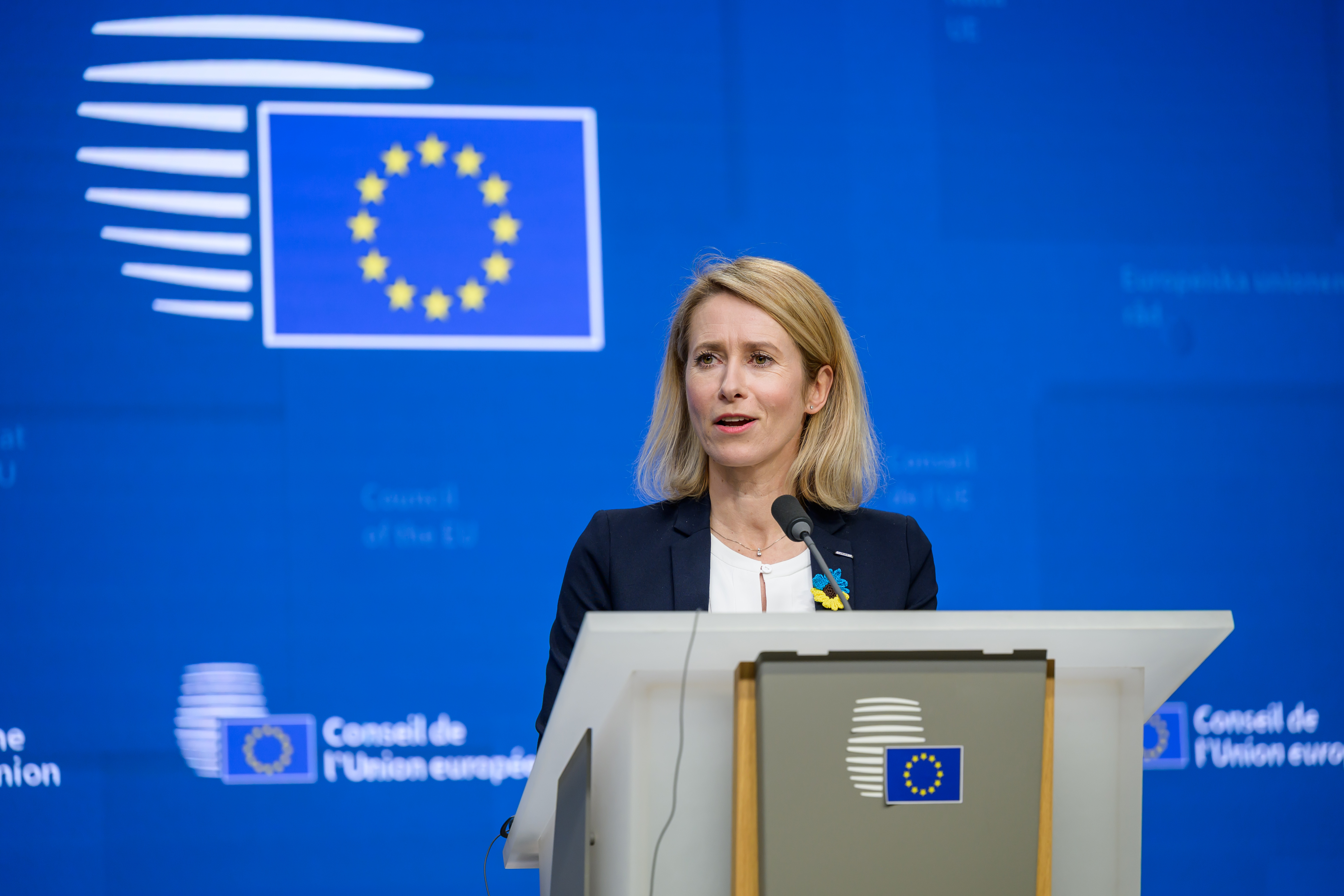 Current EU High Representative for Foreign Affairs and Security Policy Kajas Kallas © European Union.
A European External Action Service (EEAS) has been established, effectively the diplomatic service of the European Union. Again, with a view to maximising coherence across the EU’s external action, the staff of the EEAS is drawn both from the Commission and from the diplomatic services of the Member States.
Common Security and Defence Policy
The Common Security and Defence Policy (CSDP) is an integral part of the EU’s Common Foreign and Security Policy.
It provides the EU with the capacity to undertake peacekeeping and conflict prevention missions and to contribute to the strengthening of international security. It draws on both civilian and military assets.
The security and defence dimension of the EU is set to grow very significantly, including in budgetary terms. This is an inevitable consequence of Russia’s brutal war on the Ukraine, its imperialist ambitions, and the obvious threat it already poses to the security of the European continent, including to that of all EU Member States.
While Ireland’s geography sometimes makes that threat seem less immediate, Ireland already faces direct threats to its underwater cables, and from cyber-attacks and political disinformation.
Decision-making under CFSP and ESDP
One of the biggest challenges the EU faces is that all foreign policy statements and actions essentially require the unanimous agreement of all Member States. One Member State alone can prevent the EU from condemning blatant human rights abuses, gratuitous military aggression or even war crimes; or from imposing sanctions.
Hungary in particular, but occasionally others, have taken unprincipled positions that undermine the EU’s values and foreign policy and the obligation of Member States to demonstrate loyal cooperation.
This is a highly sensitive issue but also a difficult one to deal with because even those Member States that most forcefully call on the EU to take principled positions on, say, Gaza and Ukraine have so far been reluctant to end or dilute the unanimity requirement on foreign policy issues. In an increasingly dangerous world, this is an issue that will have to be looked at again.
It is worth emphasising that when the EU is accused of inaction on some foreign policy issue, it is not because some vague monolithic “EU” is prevaricating in Brussels or Strasbourg. Rather it is largely because of the unanimity requirement on foreign policy matters that few Member States have seriously contested and because one Member State, or a small group of them, is therefore in a position to block a decision that the majority wish to take.
Development Policy
Another important pillar of the European Union’s external action is its development policy. The EU aims to foster sustainable development and stability in developing countries, with the ultimate goal of eradicating extreme poverty. The EU implements international objectives which it helped to develop and is committed to achieve, including the UN’s 2030 Agenda for Sustainable Development. It is also deeply committed to the UN’s climate change objectives.

The European Union is striving to maintain the priority it attaches to helping developing countries, even as the United States and other countries have dramatically downgraded their commitment in that regard. The Russian war in Ukraine and its military threat to Europe more generally will inevitably create further pressure on the EU to shift some expenditure towards its own defence.
The European Union is potentially a very significant actor in a dangerous world that sometimes these days seems to be spinning out of control. We have the strength to defend ourselves on trade. We have the potential, working with NATO, to resist military aggression. We have the values to help us to shape a better world. The question is whether we have the ambition and the will.